As a dedicated supplier of Auto Screen Printers, I’ve witnessed firsthand the transformative impact these machines can have on the printing industry. One of the most crucial aspects of an Auto Screen Printer is its feeding system, which plays a pivotal role in ensuring smooth, efficient, and high – quality printing operations. In this blog, I’ll delve into the details of what the feeding system of an Auto Screen Printer is, its types, components, and considerations. Auto Screen Printer

The Basics of a Feeding System in Auto Screen Printers
The feeding system of an Auto Screen Printer serves as the gateway through which materials are introduced into the printing process. It is responsible for accurately and consistently delivering substrates, such as paper, plastic, metal sheets, or textiles, to the printing position. A well – designed feeding system is essential for maintaining the precision and speed required in industrial printing.
At its core, the feeding system must be able to handle different sizes, shapes, and thicknesses of materials. This adaptability allows businesses to print on a wide range of products, from small labels to large industrial panels. Moreover, it should operate smoothly to prevent jams, misalignments, and other issues that can disrupt the printing workflow and lead to wasted materials and time.
Types of Feeding Systems
Sheet Feeding System
A sheet feeding system is widely used when dealing with individual sheets of material. This type of system typically uses suction cups or grippers to pick up sheets from a stack and transfer them to the printing area. Suction – based sheet feeders are known for their ability to handle a variety of paper weights and textures. They create a vacuum that adheres to the top sheet, allowing it to be lifted and fed into the printer.
Gripper – type sheet feeders, on the other hand, are often preferred for more rigid materials or when high precision is required. The grippers firmly hold the edge of the sheet, ensuring accurate positioning during the feeding process. Sheet feeding systems are commonly found in applications such as printing business cards, brochures, and packaging materials.
Roll Feeding System
Roll feeding systems are designed for continuous printing on materials that come in roll form, such as labels, tapes, and flexible packaging. These systems unwind the material from a roll, feed it through the printing area, and then re – wind it or cut it into individual pieces.
One of the key advantages of a roll feeding system is its ability to handle long runs without the need for frequent reloading. This leads to increased productivity and reduced downtime. Roll feeding systems often incorporate tension control mechanisms to ensure that the material is fed evenly, preventing wrinkles and misprints.
Web Feeding System
Similar to roll feeding systems, web feeding systems deal with continuous materials. However, web feeding is typically associated with larger – scale printing operations, such as newspaper and magazine printing. The web, which can be several meters wide, is fed through a series of rollers and printing units at high speeds.
Web feeding systems require precise control of tension, speed, and alignment to produce high – quality prints. They often use sophisticated sensors and control systems to monitor and adjust these parameters in real – time.
Components of a Feeding System
Pick – up Mechanisms
As mentioned earlier, pick – up mechanisms are essential for initiating the feeding process. In sheet feeders, suction cups or grippers are used to pick up the top sheet from a stack. These mechanisms need to be carefully calibrated to ensure that only one sheet is picked up at a time, even when dealing with textured or sticky materials.
In roll and web feeding systems, the pick – up may involve unwinding the material from a roll using motors and tension – control devices. The process must be smooth to prevent breaks or snags in the material.
Conveyor Belts
Conveyor belts play a crucial role in transporting the substrate from one part of the feeding system to another and through the printing unit. They need to have the right surface texture and traction to grip the material firmly without causing damage.
For example, in some high – precision printing applications, conveyor belts may be made of special materials that are electrostatically neutral to prevent static – related issues. The speed and alignment of the conveyor belts are also carefully controlled to ensure accurate positioning of the substrate during printing.
Sensors
Sensors are an integral part of the feeding system. They are used to detect the position, presence, and alignment of the substrate. For example, optical sensors can detect the leading edge of a sheet, allowing the feeding system to adjust its speed and position accordingly.
In addition, sensors can monitor the tension of the material in roll and web feeding systems, triggering adjustments to prevent over – or under – tensioning. These sensors provide real – time feedback to the control system, ensuring that the feeding process remains stable and accurate.
Control Systems
The control system is the brain of the feeding system. It coordinates the operation of all the components, including pick – up mechanisms, conveyor belts, and sensors. Modern control systems are often based on programmable logic controllers (PLCs) or computer – based systems.
These control systems allow for easy adjustment of feeding parameters, such as speed, timing, and tension. They also enable the integration of the feeding system with other parts of the Auto Screen Printer, such as the printing head and the drying unit.
Considerations for Choosing a Feeding System
Material Compatibility
The first consideration when choosing a feeding system is the type of material you will be printing on. Different materials have different properties, such as thickness, flexibility, and surface texture, which can affect the performance of the feeding system.
For example, if you are printing on thin, delicate materials, a suction – based sheet feeder with gentle handling capabilities may be more suitable. On the other hand, if you are dealing with thick, rigid materials, a gripper – type sheet feeder or a roll feeding system with robust tension control may be required.
Production Volume
The production volume also plays a significant role in determining the appropriate feeding system. For low – volume production, a simple sheet feeding system may be sufficient. However, for high – volume printing, a roll or web feeding system may be more cost – effective and efficient.
Roll and web feeding systems can handle continuous printing without frequent interruptions for reloading, which is ideal for mass – production scenarios.
Printing Precision
The level of printing precision required for your application will impact the choice of feeding system. Applications that demand high precision, such as printing circuit boards or fine – art reproductions, need a feeding system that can accurately position the substrate.
This may involve feeding systems with advanced sensors and precise control mechanisms to ensure that the material is fed with minimal deviation from the desired position.
Cost and Maintenance
Cost is always a factor in any business decision. The initial investment in a feeding system can vary widely depending on its type, complexity, and the features it offers. In addition to the purchase price, it’s important to consider the long – term maintenance costs.
Some feeding systems may require frequent replacement of parts or specialized maintenance, which can add to the overall cost of ownership.
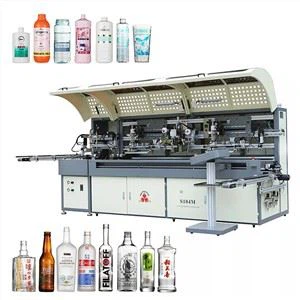
In conclusion, the feeding system of an Auto Screen Printer is a complex and essential component that significantly impacts the efficiency, quality, and productivity of the printing process. As a supplier, I understand the importance of providing the right feeding system for each customer’s specific needs. Whether you’re looking for a sheet feeder for small – scale printing or a high – speed web feeding system for large – volume production, we have the expertise and solutions to meet your requirements.
Accessories If you’re interested in learning more about our Auto Screen Printers and their feeding systems, or if you’re ready to discuss a potential purchase, I encourage you to reach out. Our team of experts is always ready to assist you in finding the perfect printing solution for your business.
References
- "Screen Printing Technology Handbook", John Wiley & Sons
- "Industrial Printing Equipment: Principles and Applications", CRC Press
- "Advances in Printing Systems: A Review of Recent Research", Journal of Printing Science and Technology
Shenzhen Hejia Automatic Printing Machine Co., Ltd.
Shenzhen Hejia Automatic Printing Machine Co., Ltd. is one of the most professional auto screen printer manufacturers and suppliers in China. All products for sale come in high precision and reliable performance. If you’re interested in it, welcome to place orders for auto screen printer from our factory. Good prices and services are offered in our factory.
Address: No.3 Building, Daerxun Technology Ind. Zone, No.29 Pingxin North Road, Pinghu Town, Longgang, Shenzhen City, China
E-mail: info@apm-print.com
WebSite: https://www.apm-print.com/
