Hey there, folks! I’m in the rubber bushing supply game, and today I wanna chat about something super important – the shear modulus of a rubber bushing. Rubber Bushing

So, what the heck is shear modulus anyway? In simple terms, it’s a measure of how a material responds to shear stress. When you push or pull on a rubber bushing in a way that makes its layers slide past each other, that’s shear stress. And the shear modulus tells us how much the bushing will deform under that stress.
For rubber bushings, the shear modulus is a crucial property. See, rubber bushings are used in all sorts of applications, from cars and trucks to industrial machinery. In vehicles, they help reduce vibrations, isolate noise, and provide a smooth ride. And the shear modulus plays a big role in how well they do those jobs.
Let’s say you’ve got a car with rubber bushings in the suspension system. When you hit a bump on the road, the bushings are subjected to shear stress. A bushing with the right shear modulus will deform just enough to absorb the shock and keep the ride comfortable. If the shear modulus is too high, the bushing will be too stiff, and you’ll feel every little bump. On the other hand, if the shear modulus is too low, the bushing will deform too much, and the car’s handling could be affected.
Now, the shear modulus of a rubber bushing isn’t a fixed value. It can be influenced by a bunch of factors. First off, the type of rubber used makes a huge difference. Different rubber compounds have different molecular structures, which affect their elastic properties. For example, natural rubber generally has a different shear modulus compared to synthetic rubbers like neoprene or nitrile rubber.
The temperature also plays a significant role. Rubber is a temperature – sensitive material. As the temperature goes up, the molecules in the rubber become more energetic and can move around more easily. This usually results in a decrease in the shear modulus. So, a rubber bushing that works great in warm weather might become stiffer and less effective in cold temperatures.
Another factor is the pre – load on the bushing. If a bushing is installed with a certain amount of compression or tension, it can change the way it responds to shear stress. A pre – loaded bushing might have a different effective shear modulus compared to an un – loaded one.
The shape and size of the bushing also matter. A thicker or wider bushing might have a different shear modulus behavior compared to a thinner or smaller one. The geometry of the bushing can affect how the stress is distributed within the rubber material.
As a rubber bushing supplier, I know how important it is to get the shear modulus right. We work closely with our customers to understand their specific needs. Whether it’s for a high – performance sports car or a heavy – duty industrial machine, we need to select the right rubber compound and design the bushing in a way that gives the optimal shear modulus.
We use a variety of testing methods to measure the shear modulus of our rubber bushings. One common method is the shear test, where we apply a known shear stress to a sample of the bushing material and measure the resulting deformation. This gives us a value for the shear modulus. We also conduct tests at different temperatures to understand how the shear modulus changes under real – world conditions.
Once we have the test results, we can fine – tune our manufacturing process. We might adjust the recipe of the rubber compound, change the curing time or temperature, or modify the shape of the bushing to get the desired shear modulus.
Customers often come to us with specific performance requirements. For example, they might need a bushing that can handle high – frequency vibrations without excessive wear. In these cases, we focus on finding a rubber compound with a shear modulus that can provide the right level of damping. Damping is the ability of the bushing to absorb and dissipate energy, which is crucial for reducing vibrations.
On the other hand, some customers need bushings for applications where precision is key. For instance, in aerospace or medical equipment, the shear modulus needs to be very consistent and within a narrow range. We use strict quality control measures to ensure that every bushing we produce meets these high – precision requirements.
So, if you’re in the market for rubber bushings, understanding the shear modulus is essential. It’s not just a technical term; it directly affects the performance of the bushing in your application. And as a supplier, we’re here to help you make the right choice.
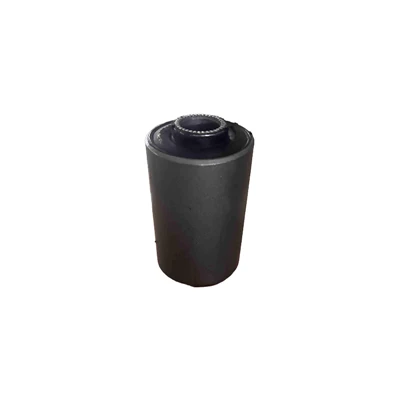
If you’ve got questions about our rubber bushings, or if you’re interested in discussing a specific project, don’t hesitate to reach out. Whether you need a small batch of custom – made bushings or a large – scale production run, we’ve got the expertise and the resources to meet your needs. Let’s talk about how we can work together to get the perfect rubber bushings for you.
Rubber Bushing References
- "Rubber Engineering Handbook"
- "Elastomers and Rubber Compounding Materials"
Anhui Anling Rubber & Plastic Co., Ltd.
We are one of the most professional rubber bushing manufacturers and suppliers in China, featured by quality products and good service. Please rest assured to wholesale bulk rubber bushing in stock here and get quotation from our factory. We also accept customized orders.
Address: 3.9-Square-Kilometer Industrial Park in the Development Zone, Anqing City, Anhui Province
E-mail: anhuianling@126.com
WebSite: https://www.anhuianling.com/
