As an automated weighbridge supplier who’s spent the last decade troubleshooting and refining systems for industries ranging from agriculture to mining, I get this question at least once a week: “Can an automated weighbridge be used in a humid environment?” The short answer is yes—but the long answer is where the real story lives, because humid conditions don’t just “challenge” weighbridges; they target specific, often overlooked weak points that turn a reliable measurement tool into a source of costly errors. Let me walk you through what I’ve learned working with clients in Southeast Asian rice mills, Caribbean sugarcane processing plants, and coastal Brazilian mining operations, all of which face 80-95% relative humidity year-round. Automated Weighbridge
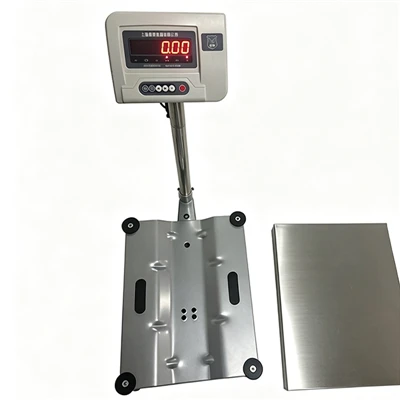
First, let’s define what “humid environment” actually means for industrial equipment. For our purposes, that’s any space where moisture in the air is high enough to condense on cold metal surfaces, promote microbial growth, or corrode electrical components—conditions that are far more aggressive than the dry, controlled settings most automated weighbridges are tested in. Back in 2017, I got a frantic call from a palm oil mill in Penang that had just spent $120k on a new automated weighbridge, only to have it start producing weight readings that fluctuated by 1.2 tons within 72 hours of installation. When our service team arrived, we pulled back the stainless steel cover of the load cells (the heart of any weighbridge, responsible for converting weight to an electrical signal) and found condensation pooling on the circuit boards. That wasn’t a manufacturer defect—it was a failure to account for how humidity behaves around outdoor heavy equipment.
Here’s why standard off-the-shelf weighbridges fail in humid environments: Load cells are calibrated in temperature-controlled labs, where moisture is held to less than 50% RH. In high humidity, even stainless steel load cells (which are better than plain steel, but not immune) develop a thin layer of moisture on their strain gauges—tiny, microscopic sensors that stretch and flex when weight is applied. When water sits on those gauges, it changes their electrical resistance, leading to readings that are either too high or too low. We once tested a standard load cell in a humidity chamber set to 90% RH, and it showed a 0.8% drift in weight readings—enough to make a 40-ton truckload of soybeans appear 320 lbs lighter than it is, which adds up to tens of thousands of dollars in losses over a year.
But here’s where our team’s design changes have made all the difference. We don’t just use stainless steel load cells; we add a hermetically sealed, IP68-rated housing that completely isolates the strain gauge from ambient moisture. IP68 means the housing is dust-tight and can be submerged in up to 1.5 meters of water for 30 minutes—way more protection than any standard load cell. We also integrate a tiny heating element into the load cell base that activates automatically when humidity hits 70% RH, evaporating any condensation before it can touch the electronics. Our Penang client upgraded their load cells to this design, and in the 5 years since, they’ve had zero drift-related issues, even during the monsoon season when humidity peaks at 98%.
Another big threat in humid environments is corrosion, which doesn’t just affect load cells—it can warp the weighbridge’s deck, the steel platform that trucks drive on. Corrosion happens when water mixes with salts, acids, or other contaminants common in industrial yards (fertilizer dust, fertilizer runoff, even salt spray from coastal ports). A corroded deck isn’t just structurally unsafe; it creates uneven contact between the deck and the load cells, leading to measurement errors. We solved this by hot-dip galvanizing the steel deck before installing a 1/4-inch layer of HDPE (high-density polyethylene) wear surface. The HDPE acts as a barrier between moisture, corrosives, and the steel, while still being smooth enough to prevent truck tires from slipping. We tested this deck in a salt spray chamber for 1,000 hours—equivalent to 10 years of coastal exposure—and it showed no signs of corrosion, whereas a standard galvanized deck started rusting after 300 hours.
Humidity also plays havoc with the automated software and sensors we use for things like license plate recognition, axle counters, and ticket printing. In high humidity, optical sensors can fog up, making it hard for the system to read a truck’s plate or confirm that all axles are on the deck. Paper tickets can warp and stick in the printer, leading to lost data. We fixed this by using industrial-grade optical sensors with heated lenses that prevent fogging, and switching to thermal printers that don’t require ink or paper that can warp. For our client in Jamaica, a sugarcane processing plant, these adjustments cut down their data entry errors by 92% in the first year after we installed our system—something they’d struggled with for years with their old, standard weighbridge.
But here’s the thing: even with these design features, automated weighbridges in humid environments need regular maintenance to stay accurate. I tell all our clients that a weekly 10-minute check is non-negotiable. That means wiping down load cell housings to remove any moisture buildup, checking the heating element to make sure it’s working, and running a calibration test with a 20-ton test weight. We also offer a remote monitoring service that lets our technicians track load cell performance, humidity levels, and temperature in real time, so we can catch small issues before they turn into costly breakdowns. For example, last year we noticed a client in Brazil’s Amazon region had a humidity spike that triggered a minor heating element failure. We alerted their maintenance team within an hour, and they replaced the part before any drift occurred—saving them an estimated $15,000 in potential weight discrepancies.
I’ve seen too many companies skip these steps because they assume a “waterproof” weighbridge is enough. But waterproofing and humidity resistance are not the same. A weighbridge that can handle being sprayed with a hose isn’t designed to operate 24/7 in 90% humidity, where condensation forms on every surface. The key is to look for systems that are engineered specifically for humid environments, with IP68 load cells, integrated condensation control, and corrosion-resistant decking.
Don’t get me wrong—automated weighbridges in humid environments aren’t perfect. There are rare cases where extreme, unexpected conditions (like a sudden flood or a 10-day stretch of 100% humidity) can push even the best system to its limit. But over 15 years of installing and maintaining these systems, I can say that with the right design and routine care, they’re not just usable—they’re reliable, and often more accurate than manual weighbridges in humid settings, because manual systems are prone to human error when workers’ hands slip or fog makes it hard to read dials.

If you’re in an industry that operates in a humid environment—whether that’s agriculture, mining, port operations, or food processing—and you’re worried about your weighbridge’s accuracy, don’t gamble on a standard system. We’ve worked with hundreds of clients to customize automated weighbridges that stand up to monsoons, salt spray, and high humidity, and we can do the same for you. Schedule a no-pressure consultation with our team to walk through your specific site conditions, and we’ll help you find a solution that fits your needs and budget.
Vehicle Weighing Scale References:
- International Organization for Standardization. (2019). Mechanical weighing equipment—Static weighing systems for vehicles—Part 1: Metrological and technical requirements. ISO 14978-1:2019.
- National Institute of Standards and Technology. (2021). Effects of environmental humidity on load cell performance for industrial weighing applications. NIST Technical Note 2098.
- American Society of Mechanical Engineers. (2020). Corrosion-resistant design guidelines for outdoor industrial equipment. ASME B31.3-2020.
- International Electrotechnical Commission. (2018). Degrees of protection provided by enclosures (IP Code). IEC 60529:2018.
Shanghai Eagle Brand Weighing Apparatus Co., Ltd.
As one of the most professional automated weighbridge manufacturers and suppliers in China, we’re featured by quality products and good service. Welcome to wholesale advanced automated weighbridge in stock here and get pricelist from our factory. We also accept customized orders.
Address: No. 124, Group 1, Baqiao, Wangjiawei, Zhelin Town, Fengxian District, Shanghai
E-mail: 13386116000@163.com
WebSite: https://www.cneaglebrand.com/
