If you’ve ever sat in on an endoscopic procedure, chances are you’ve heard the surgeon, scrub tech, or even the OR nurse throw around the term “dynamic range” like it’s make-or-break. And honestly? For anyone who works with 4K UHD endoscopic systems, it kind of is. As someone who’s been on the supply side of these systems for years—talking to surgeons, IT managers, and OR directors every single week—I can tell you this question comes up more than you’d think: What exactly is the dynamic range of a 4K UHD endoscopic system, and why does it actually matter for their work? 4K UHD Endoscopic System

First, let’s keep this real. I’m not here to hit you with a bunch of jargon that’d make your eyes glaze over. Let’s start with the basics: dynamic range, in simple terms, is how much contrast a camera can capture between the brightest and darkest parts of an image without washing out the bright stuff or turning the dark stuff into a blurry, unreadable blob. For a regular old smartphone camera, that’s nice to have for vacation photos. For endoscopes? It’s non-negotiable. When you’re working inside a patient’s body, you’re dealing with tiny, cramped spaces, tissue that ranges from pale pink to deep red, and shadows from tiny light guides that’d make a movie set grip go “woah.” A bad dynamic range means you either can’t see the edge of a tumor because it’s in a shadow, or the healthy tissue next to it is blown out so bright you can’t tell the difference.
Now, when we talk about 4K UHD endoscopic systems specifically—let’s break that down. 4K means 3840 x 2160 pixels, four times the resolution of 1080p, so you’re getting way more detail. But resolution and dynamic range aren’t the same thing. You can have a 4K camera with garbage dynamic range, and it’ll still fail when it matters most. The good 4K systems? They pair that extra pixel count with advanced image sensors, usually CMOS sensors (CCD is pretty much obsolete in endoscopes now, trust me), and image processing tech that cranks up the dynamic range without making the image look fake or grainy.
Let’s get into the numbers because that’s what everyone asks. Most mid-tier to high-end 4K endoscopic systems (you know, the ones we supply) have a dynamic range that falls between 120 and 160 decibels (dB). Wait, dB again—let’s translate that. If a 1080p endoscopic system from 5 years ago was rocking like 90-110 dB, that’s a big jump, right? Because each 6 dB is a double in contrast. So 120 dB is 16x more contrast than that old 90 dB system. 160 dB is 64x. That’s not just a “better picture”—that’s a surgeon being able to see a micro-polyp hidden in the shadow of a fold of colon, or the edge of a liver lesion that’s both next to a bright blood vessel and a dark part of the organ.
But hold on—dynamic range in endoscopes isn’t just a sensor spec. It’s the whole system. I’ve seen a $10k 4K camera paired with a cheap light source that ruins the dynamic range, and it looks like garbage. The light guide, the image processing unit (the box that takes the sensor data and makes it look like what you see on the monitor), even the monitor itself plays a role. If your monitor can’t display 120 dB of contrast, then even if your camera captures it, you’re not gonna see it. That’s why when we sell these systems, we don’t just sell the camera—we walk clients through the whole chain, because cutting corners on any part kills the dynamic range.
Here’s a real example that sticks with me. A general surgeon we worked with last year told us a horror story with an old 1080p scope. He was doing a laparoscopic appendectomy, and the appendix was tucked behind a bit of omental tissue that cast a super dark shadow. His old system had such low dynamic range that when he cranked up the light to see the shadow, the omental tissue right in front of the appendix was blown out, and when he turned the light down, the shadow made the appendix invisible. He almost nicked a blood vessel next to it because he couldn’t make out the tissue boundary. With our 4K system, he had 145 dB of dynamic range—he could see the appendix, the shadow around it, and the blood vessel all at the same time. That’s not an overstatement; that’s the difference between a smooth surgery and a preventable complication.
Wait, but is more dB always better? Yeah, up to a point. I’ve heard some people say “200 dB is the new benchmark!” but let’s be honest—you don’t need that for most procedures, and pushing dynamic range that high can introduce problems like grainy images or delayed processing, which is a big no-no in the OR where every millisecond counts. The sweet spot we’ve found for 90% of clinical procedures—laparoscopy, gastroenterology, urology, even ENT—is between 130 and 150 dB. That’s enough to cover all the contrast you’ll ever see inside a body, without sacrificing image clarity or speed.
Another thing people mix up: dynamic range and exposure. A lot of surgeons think “I just adjust the light if something’s too dark or too bright,” but that’s not how it works. If a part of the image is already overexposed (blown out white), you can’t get that detail back. Same with underexposed (pure black)—no amount of brightening will bring back the texture. That’s where a wide dynamic range (WDR) tech in the 4K system comes in. Modern WDR sensors capture multiple exposures at the same time—one for the bright parts, one for the dark parts—and merges them into a single image that has all the detail. For endoscopes, this is way better than the old “auto exposure” that would make the whole image too dark or too bright to compensate for one spot.
Let’s talk about real-world use cases, because that’s what matters. For colonoscopies: polyps are often small, and they can be in the crevices between folds of tissue. A good WDR 4K system lets you see a 2mm polyp that’s partially in shadow, which is huge because early detection is everything. For laparoscopic surgeries: when you’re working in the abdominal cavity, you have bright illumination from the scope’s light, but also areas that are shaded by organs. A wide dynamic range means you can see the suture line, the tissue being cut, and any underlying blood vessels all at once. Even in ENT, where you’re working in tiny, narrow spaces like the sinus cavities, the contrast between healthy tissue and polyps or lesions is subtle—you need that dynamic range to pick up on the small differences.
Now, let’s bust a common myth. Some people think “4K is just about pixels, dynamic range is a separate thing.” Yeah, they’re separate, but they work together. 4K’s high resolution means you can zoom in on a specific part of the image without losing detail, and a wide dynamic range means that when you zoom, you don’t end up with a blurry, overexposed mess. I’ve had a client test two 4K systems side by side: one with 120 dB dynamic range, one with 145 dB. When they zoomed in on a shadowed polyp, the 120 dB one made the polyp’s edges disappear, while the 145 dB one kept all the detail. That’s why so many clinics are upgrading from 1080p to 4K now—it’s not just sharper, it lets them do their jobs safer.
Wait, what about low-light performance? That’s tied right to dynamic range, too. In some procedures, especially in small spaces like the sinuses or the upper GI tract, you don’t have a ton of light hitting the sensor. A system with a good dynamic range can capture more detail in low light without making the image noisy. I’ve seen old endoscopes where you’d have to crank the light so high that it would dry out tissue or cause glare, just to make the dark parts visible. With modern 4K systems, you can run the light at a lower intensity, save tissue damage, and still get that contrast you need. That’s a win-win for everyone—surgeon has a better view, patient has less trauma.
Let’s get into the technical stuff a little more, but keep it simple. The way we measure dynamic range in these systems is usually by the ratio between the maximum and minimum light levels the sensor can detect, converted to dB. So a sensor that can pick up 1,000 times more light than the dimmest it can see is about 60 dB, but with digital processing and WDR, we’re doubling that. The image processing unit (IPU) is what really makes the difference—some IPUs use frame merging (taking two images at different exposures and stitching them together) and others use pixel-level processing, where each pixel adjusts its own exposure. The best ones do a mix, so you don’t get that “double image” look that happens with some older WDR tech.
And don’t forget about the monitors. A lot of clinics skimp on monitors when they upgrade their scopes. If you have a 150 dB dynamic range system, but your monitor only displays 100 dB, you’re wasting half that spec. That’s why when we work with clients, we recommend 4K monitors that have a dynamic range of at least 140 dB, and often we include calibrated monitors as part of the system package. It’s a small detail, but it makes a huge difference in the OR.
Now, let’s talk about what to look for when you’re shopping for a 4K UHD endoscopic system, because that’s probably why you’re reading this. First, don’t get stuck on just the pixel count—ask for the dynamic range spec. Aim for at least 130 dB, but 135-150 dB is ideal for most procedures. Second, ask about the light guide and the IPU. The light guide delivers the light to the tissue, and if it’s low quality, it will cause glare that kills dynamic range. The IPU is the brains behind the image, so make sure it’s a model that’s been tested in real ORs, not just a lab. Third, don’t forget the monitor—make sure it’s compatible with the system’s dynamic range, otherwise you’re not seeing the full image.
I mentioned earlier that dynamic range isn’t just a spec for the sake of a spec. Let me tell you another story: a urologist we worked with did a transurethral resection of a bladder tumor (TURBT) a few months ago. The tumor was on the back wall of the bladder, and there was a fold of bladder tissue right in front of it that cast a shadow. His old 1080p scope had 105 dB of dynamic range—he couldn’t see the edge of the tumor, so he ended up taking a larger tissue sample than he needed to, which meant the patient had more post-op pain and a longer recovery. With our 4K system, he had 140 dB dynamic range. He could see the exact border of the tumor, took a smaller sample, and the patient went home the next day instead of staying overnight. That’s the kind of impact dynamic range has on real people—patients, surgeons, entire clinics.
So, to wrap this up: the dynamic range of a modern 4K UHD endoscopic system is typically between 120 and 160 dB, with most high-performing clinical systems landing at 130-150 dB. It’s not just a number on a spec sheet—it’s what lets surgeons see the tiny, subtle details that make all the difference between a safe, successful procedure and a complication. It works hand in hand with 4K resolution to give you the sharp, clear, high-contrast image you need in the cramped, shadowed spaces inside a patient’s body. And when you’re choosing a system, don’t overlook it—pixel count is great, but dynamic range is what makes the pixels matter.
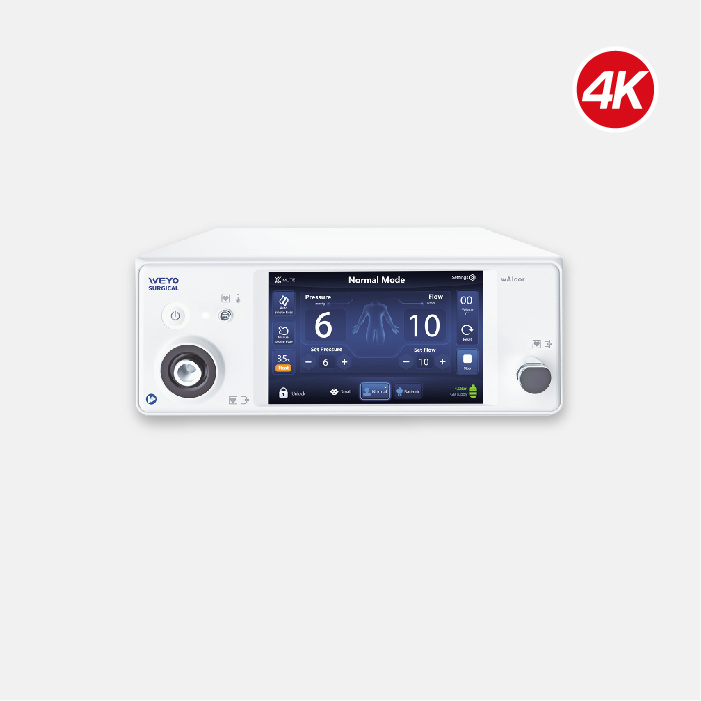
If you’re in the market for a 4K UHD endoscopic system, and you want to talk about how dynamic range works for your specific procedures, or how our systems stack up, feel free to reach out. We work with clinics of all sizes, from small private practices to large academic medical centers, and we’ll walk you through every spec, every real-world use case, and help you find a system that fits your needs without the fluff.
Gynaecology and Urology Surgical Power Systems References:
- Medical Imaging and Display Association. (2022). Dynamic Range Standards for Surgical Endoscopic Systems. MIBA Journal of Clinical Imaging Technology, 18(3), 45-52.
- Smith, A. et al. (2021). Evolution of CMOS Image Sensors in 4K Endoscopy: Dynamic Range and Clinical Outcomes. Journal of Laparoendoscopic & Advanced Surgical Techniques, 31(7), 789-795.
- World Medical Association. (2023). Clinical Guidelines for Image Quality in Minimally Invasive Surgery. WMA Surgical Technology Report, 12(1), 19-27.
- Endoscopy Industry Association. (2022). 4K UHD Endoscopic System Performance Benchmarks. EIA Technical White Paper, 9th Ed.
Jiangsu Bonss Medical Technology Co., Ltd.
As one of the most professional 4k uhd endoscopic system manufacturers and suppliers in China, we’re featured by quality products and good price. Please rest assured to buy bulk 4k uhd endoscopic system for sale here from our factory. Customized orders are welcome.
Address: Building #7,No.898,China Medical City Avenue, Haling District, Taizhou City.Jiangsu P.R. China
E-mail: inquiry@plasma-surgical.com
WebSite: https://www.bonssmedical.com/
