Yo, what’s up! I’m an anti-fouling RO membrane supplier, and today I wanna chat about something super important in our field: what the effect of membrane permeability is on anti-fouling RO membranes. Anti-fouling RO Membrane

First off, let’s break down what membrane permeability actually is. In simple terms, it’s how easily a fluid (usually water in our case) can pass through the membrane. Think of it like a sieve. If the holes in the sieve are big, water can flow through quickly, right? That’s high permeability. But if the holes are tiny, water takes a lot longer to get through, and that’s low permeability.
Now, why does this matter for anti-fouling RO membranes? Well, the permeability of the membrane has a huge impact on how well it works overall. When we talk about RO (reverse osmosis) membranes, the main goal is to separate impurities from water. Anti-fouling membranes are designed to resist the build-up of stuff like dirt, bacteria, and other particles that can clog the membrane and make it less effective over time.
One of the most obvious effects of membrane permeability on anti-fouling RO membranes is related to the flow rate. A membrane with high permeability allows water to pass through it at a faster pace. This means that in a water treatment system, you can get more clean water in a shorter amount of time. That’s a big plus for industries and households that need a large supply of treated water. For example, in a big factory that uses water for its manufacturing processes, a high – permeability anti – fouling RO membrane can ensure a continuous and sufficient supply of clean water.
But it’s not all about speed. High permeability also affects the energy consumption of the RO system. When water can pass through the membrane more easily, the pressure required to push the water through is lower. And lower pressure means less energy is needed to run the pumps in the RO system. This is a huge cost – saver in the long run. As an anti – fouling RO membrane supplier, I always tell my clients that choosing a membrane with the right permeability can significantly reduce their operational costs.
However, there’s a bit of a trade – off. Membranes with very high permeability might be more prone to fouling. You see, when water flows through the membrane quickly, it can carry more particles along with it. These particles can then stick to the membrane surface and start to form a layer of fouling. This is where the anti – fouling properties of the membrane come into play. Our anti – fouling RO membranes are designed to have a special surface that resists the attachment of particles. But even with these features, a very high – permeability membrane might still face more fouling challenges compared to a lower – permeability one.
On the flip side, a membrane with low permeability has its own set of pros and cons. The main advantage is that it can provide a higher level of filtration. Since water passes through more slowly, the membrane has more time to trap and remove impurities. This can result in cleaner water output. But the downside is the slow flow rate and higher energy consumption. As I mentioned earlier, lower permeability means higher pressure is needed to push water through, which in turn requires more energy.
So, as a supplier, how do we find the right balance? Well, it all depends on the specific needs of the client. For some applications, like in a small household water purification system where the water demand isn’t extremely high, a lower – permeability membrane might be a better choice. It can provide cleaner water and might not need to work as fast. But for large – scale industrial applications, a higher – permeability membrane is often preferred, even though there’s a higher risk of fouling. That’s why we offer a range of anti – fouling RO membranes with different levels of permeability.
Another thing to consider is the lifespan of the membrane. A membrane that is constantly fouled will have a shorter lifespan. If the membrane permeability causes too much fouling, then the membrane will need to be replaced more frequently. This not only adds to the cost but also means more downtime for the water treatment system. Our anti – fouling membranes are engineered to have a good lifespan, even under different permeability levels. We use advanced materials and manufacturing techniques to ensure that the membrane can resist fouling and maintain its performance over time.
In addition to the direct effects on flow rate, energy consumption, and fouling, membrane permeability also affects the overall efficiency of the RO system. An efficient system is one that can produce the maximum amount of clean water with the least amount of energy and maintenance. By choosing the right permeability for the anti – fouling RO membrane, we can optimize the system’s efficiency. For instance, if we can find a membrane with just the right balance of high enough permeability to ensure a good flow rate and low fouling tendency, the system can run smoothly for a long time without major issues.
As an anti – fouling RO membrane supplier, I’ve seen all kinds of systems out there. Some clients are more focused on getting the cleanest water possible, while others are more concerned about cost – effectiveness and high – volume production. That’s why we work closely with our clients to understand their specific requirements. We analyze the water source, the desired water quality, and the production volume. Based on this information, we can recommend the most suitable anti – fouling RO membrane with the ideal permeability.
In conclusion, membrane permeability has a profound effect on anti – fouling RO membranes. It impacts everything from flow rate and energy consumption to fouling resistance and system efficiency. As a supplier, our job is to help our clients find the perfect balance. We have a wide range of products to meet different needs, and we’re always here to offer our expertise and support.
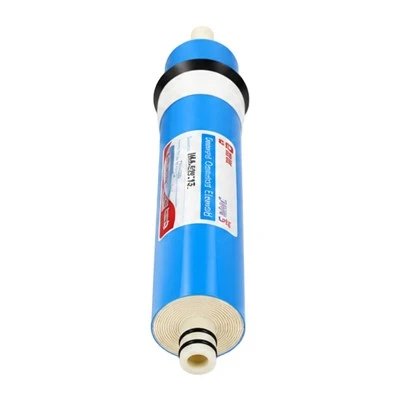
If you’re in the market for anti – fouling RO membranes, whether you’re a small business or a large industrial facility, I’d love to have a chat with you. Let’s discuss your specific requirements and find the best membrane solution for you. Don’t hesitate to reach out and start a conversation about your water treatment needs.
High Rejection RO Membrane References:
- "Reverse Osmosis Membrane Technology: Principles, Design, and Applications" by M. S. Bhattacharyya
- "Fouling in Reverse Osmosis Membranes: Causes, Consequences, and Control" by R. W. Field
Fujian Huamo Technology Co., Ltd.
Fujian Huamo Technology Co., Ltd. is one of the most professional anti-fouling ro membrane manufacturers and suppliers in China, featured by quality products and good service. Please rest assured to wholesale the best anti-fouling ro membrane made in China here and get price list from our factory. Contact us for custom service and OEM service.
Address: No.6 Hengtong Rd, Shanmei Village, Xiamei Town, Nanan City, Fujian Province, China
E-mail: info@huaromembrane.com
WebSite: https://www.hmromembrane.com/
