If you’ve ever stood near a power plant on a sweltering summer afternoon, watching rows of shiny, air-cooled heat exchangers glint in the sun, you’ve likely seen an Air Cooled Condenser (ACC) at work. As a supplier of these systems, I’ve spent years in the field, troubleshooting corrosion issues, tweaking designs, and talking to plant operators who’ve dealt with costly shutdowns caused by rust, pitting, and material degradation. Corrosion isn’t just an inconvenience for ACCs—it’s a silent killer that erodes performance, cuts equipment life, and eats into maintenance budgets. The good news? A huge portion of corrosion risks isn’t bad luck or “bad metal”—it’s in the design. Every choice we make when engineering an ACC, from the shape of its tubes to how we route air flow, directly impacts how well it holds up against the harsh, moisture-laden environments these systems operate in. Let’s break down how condenser design shapes corrosion resistance, and what that means for plant owners who don’t want to end up replacing their equipment every five years. Air Cooled Condenser
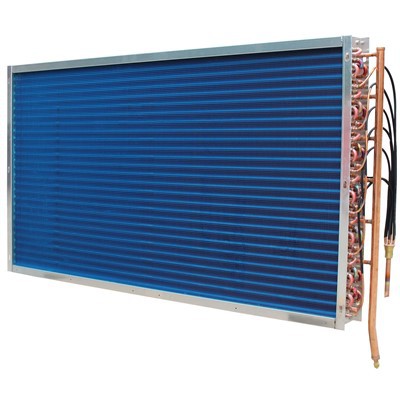
First, let’s ground this in how an ACC works. Unlike water-cooled condensers that use gallons of recirculated water to pull heat away, ACCs rely on ambient air flow to cool exhaust steam from turbines. That means they’re exposed to the elements 24/7: rain, humidity, airborne salts from coastal areas, sulfur compounds from nearby industrial sites, and even road salt if the plant is located near a highway. The core of an ACC is its tube bundle—hundreds of thin-walled tubes that carry the condensing steam. When steam hits the inside of a tube, it condenses into water, forming a thin liquid film. If that film stays uniform, corrosion is minimal. But if the design creates spots where liquid pools or air stagnates, that’s where trouble starts.
One of the biggest design factors I see influencing corrosion is tube geometry and surface finish. A few years back, I worked with a power plant in the American Midwest that was experiencing unexpected pitting corrosion in their ACC tubes. When we pulled samples for testing, we found the tubes had a smooth, polished inner surface, and the plant was using mild carbon steel. At first glance, that seemed standard, but the issue wasn’t the steel itself—it was the way the tube was shaped. The plant had chosen straight, smooth tubes to maximize heat transfer efficiency, but that design had a hidden flaw: when steam condensed, the liquid film didn’t flow evenly. It pooled in small dips that formed at the points where the tubes connected to the header (the large pipe that distributes steam into the bundle). Those pools created a low-oxygen environment, which sped up localized pitting corrosion way faster than uniform surface wetting would. Contrast that with another project we did for a coastal power plant, where we used slightly finned, spirally grooved inner tubes. The grooves acted like tiny channels, guiding the condensed water evenly along the entire length of the tube, so no spot was left standing in a stagnant, low-oxygen puddle. The result? The plant’s corrosion rates dropped by 70% after we swapped out the old tubes, and they haven’t had a major tube leak in three years. The surface finish plays a role here too. Rough, unpolished inner surfaces might sound like they’d hold more contaminants, but a micro-textured surface that’s slightly matte (not slick) actually helps distribute condensate more evenly. Smooth, polished surfaces tend to form thicker liquid films in some areas and thinner ones in others, creating more areas for corrosion to take hold.
Next, air flow distribution is make-or-break for ACC corrosion resistance. If an ACC’s fan system is designed to push air uniformly across the entire tube bundle, every tube gets the same amount of cooling, and condensate forms consistently on every surface. But if there are dead zones—spots where air flow is weak or blocked—those areas get less cooling, so condensate forms in thicker, more stagnant layers. I learned this lesson the hard way early in my career. My first ACC project was for a small industrial plant in the Southwest, and we designed the fan array with a few large, widely spaced fans to cut costs. Within the first year, we had corrosion in a 10-foot section of the bundle where air flow was 40% lower than the rest. That section had condensate that stayed wet for days after the rest of the bundle had dried out, and airborne dust particles settled there, mixing with moisture to create a corrosive sludge. We ended up replacing that entire section of the bundle, a cost that could’ve been avoided if we’d used more, smaller fans to create uniform air flow, or added baffles to redirect air into the dead zones. Today, all our ACC designs use computational fluid dynamics (CFD) modeling to map air flow before we even build a prototype. We look for things like flow separation around tube headers, gaps between adjacent tubes that block air, and how wind (another big variable for outdoor ACCs) will impact flow. For plants in windy areas, we add wind shields to prevent high winds from creating low-pressure zones that pull air away from parts of the bundle, which would leave those areas prone to stagnant moisture. That small design tweak alone cuts corrosion risks by a significant margin, because it keeps air moving consistently across every tube.
Material selection is often tied to design, but I’d argue the two work hand in hand to resist corrosion. You could put the most expensive stainless steel tubes in an ACC with a bad design, and you’ll still get corrosion. But the right design paired with the right material makes a world of difference. For example, if a plant is located in a very corrosive environment—say, near a mining site with high sulfur dioxide levels, or a coastal area with salt spray—we might recommend using carbon steel with a specialized coating, rather than more expensive alloys like titanium that add huge upfront costs. But that coating only works if the design prevents liquid from pooling and scratching the coating. A few years ago, we did a retrofit for a plant in Canada that was using plain carbon steel tubes in their ACC, and corrosion was eating through the walls in just four years. We didn’t swap the tubes for titanium; instead, we redesigned the tube bundle to add slope to the tubes (a 1/4 inch per foot gradient) so condensate would drain fully instead of sitting in the tube ends. We also applied a dual-layer epoxy-phenolic coating to the inner tubes, paired with the spirally grooved inner surface we’d used on the coastal project. The combination of better drainage, better condensate distribution, and the coating meant the plant could keep using carbon steel, cutting material costs by 60% compared to switching to alloy tubes, and their ACC is now on track to last 15+ years, double its original life. The key here is that design makes cheaper materials viable, because it eliminates the gaps where corrosion would otherwise take hold. Without that drainage slope, the coating would’ve worn out in the areas where liquid pooled, leading to the same corrosion problem.
Another often-overlooked design factor is access for maintenance and cleaning. Even the best-designed ACC will face corrosion from dirt, mold, and biological growth if it can’t be cleaned regularly. If the tube bundle is crammed so tightly that there’s no space between tubes, you can’t get a pressure washer in to remove built-up grime. That grime traps moisture, creates low-oxygen environments, and acts as a catalyst for corrosion. On every ACC we design now, we leave at least a 6-inch gap between tube rows, and we add removable access panels along the top and sides of the bundle. For plants in dusty areas, we also incorporate a weekly automatic air-pulse cleaning system that blasts compressed air across the tubes to blow off debris, without damaging the coating or tube surfaces. I’ve seen plants skip this design detail to save upfront costs, only to have to shut down the ACC every six months for manual cleaning, which takes days and costs tens of thousands of dollars in lost power. One plant in Texas tried that early on, and after two years, their bundle was so coated with dust that corrosion rates were 3x the industry average. Adding the cleaning system and adjusting the tube spacing cut their maintenance time by 80% and stopped the corrosion in its tracks.
Environmental conditions also have to be factored into the design, which means one size definitely doesn’t fit all. An ACC in a dry, desert climate has different corrosion risks than one in a humid, coastal climate. For desert plants, the main issue isn’t salt—it’s dust and the rapid cycle of wetting and drying. When it rains in the desert, the ACC tubes get wet, then dry out quickly in the sun. That cycle creates what’s called “concentration cell corrosion”: as water evaporates, contaminants like dust salts get left behind in high concentrations, which eat away at the tube surface. To fight that, we design ACCs for dry climates with slightly more slope on the tubes to drain rainwater faster, and we add a thin, hydrophobic coating to the outer tube surface so water beads up and runs off, instead of spreading into a thin film that traps contaminants. For coastal plants, the risk is continuous salt exposure, so we use cathodic protection systems paired with tighter air flow control to prevent salt buildup, and we choose materials that are resistant to chloride-induced pitting, like high-grade carbon steel with a zinc-rich primer before the top coating.
I’ve been in this industry for 12 years, and I can’t tell you how many times plant operators have told me they thought corrosion was inevitable—just a part of owning a power plant or industrial facility with an ACC. But that’s not true. Most corrosion issues we see are preventable, and they start with the design. It’s not just about picking the right metal; it’s about shaping that metal, arranging it, planning for air flow, and accounting for the specific environment the ACC will live in. A well-designed ACC doesn’t just last longer—it runs more efficiently, too, because corrosion can reduce heat transfer by up to 30% as rust builds up on tube surfaces. That means lower fuel costs, fewer shutdowns, and less stress on your operation.
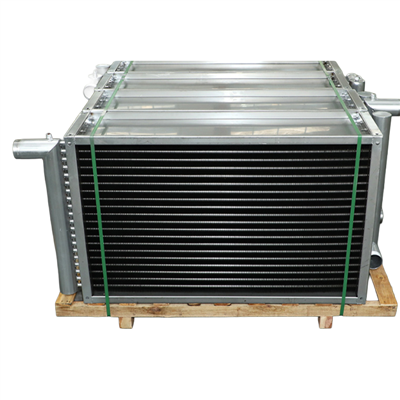
If you’re dealing with corrosion issues in your ACC, or you’re planning a new installation and want to make sure it’s built to stand up to whatever your environment throws at it, we can help. Our team has designed and installed ACCs for facilities across North America and beyond, from desert power plants to coastal industrial sites, and we work closely with operators to tailor designs to their specific needs. We don’t just sell equipment—we build systems that last, that minimize maintenance, and that keep your operation running smoothly year after year. Reach out to our team to discuss your ACC needs, and we’ll walk through design options, material choices, and corrosion resistance strategies that fit your budget and your long-term goals.
Finned Tube References
ASM International. (2018). Corrosion Engineering: Principles and Practice (2nd ed.). ASM International.
Energy Science and Technology Data Center. (2020). Air Cooled Condenser Corrosion in Power Generation: Causes and Mitigation Strategies. Department of Energy.
NACE International. (2019). Corrosion Control in Heat Exchangers and Condensers. NACE International.
Xiangshui Derkang Refrigeration Equipment Co., Ltd.
Address: No. 2, Xiaojian Town Entrepreneurship Park, Xiangshui County
E-mail: 505745223@qq.com
WebSite: https://www.xsderk.com/
