If you’ve ever had a Profibus network go down mid-shift—causing a halt on a production line, scrambling maintenance teams, and eating into your bottom line—you’ve probably wondered: Can I just swap out that specialized Profibus cable for a regular Ethernet, RS485, or even a standard power cable to fix the issue? As someone who’s been in the Profibus cable supply game for over a decade, I’ve fielded this question at least a dozen times a month, from plant managers struggling with unplanned downtime to small business owners trying to cut costs on a new setup. The short answer is: Sometimes, you can get away with it in a pinch, but more often than not, it’s a risky move that will end up costing you far more in the long run. Let’s break this down, no jargon, no sales fluff, just real-world insight from someone who’s seen both the quick fix and the catastrophic failure. Profibus Cable
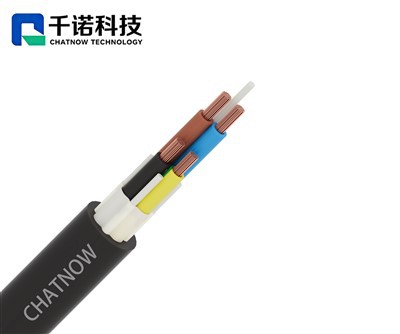
First, let’s get on the same page about what a Profibus cable actually is. Profibus, short for Process Field Bus, is a fieldbus standard used in industrial automation to connect sensors, actuators, PLCs, HMIs, and other control devices. It’s designed to carry small, time-sensitive data packets reliably across noisy industrial environments—think factories with heavy machinery, conveyor belts, welding robots, and power lines that generate constant electromagnetic interference (EMI) and radio frequency interference (RFI). A standard Profibus cable (like the popular copper Profibus Type A) isn’t just two wires: it’s a twisted pair of 22AWG copper conductors, shielded with a braided copper shield plus an aluminum foil drain wire, all wrapped in a PVC or TPE outer jacket rated for industrial use. It’s engineered specifically to meet Profibus’s strict electrical specs: a characteristic impedance of 135 ohms, a maximum bus length of 100 meters per segment (for some variants, up to 1000 meters with repeaters), and a minimum bend radius, insulation rating, and temperature range that can hold up to being run alongside power cables, dragged across plant floors, and exposed to dust, moisture, and oils.
Now, what’s a “regular cable”? For most people, that’s either a standard Ethernet cable (Cat5, Cat6), a basic RS485 cable (which is just two twisted unshielded or lightly shielded wires), or even a cheap power cable for tools or lights. Let’s go through each one, because they’re not all the same when it comes to replacing Profibus.
Starting with the most common alternative people reach for: Ethernet cable. Why? It’s everywhere, cheap, easy to source, and most plant techs already have spools lying around. The first big problem with Ethernet cable for Profibus is the impedance mismatch. Ethernet cable is designed for 100 ohm impedance (Cat5) or 150 ohm for some variants, while Profibus needs 135 ohms. When you connect two devices that use different impedance levels, data signals reflect back and forth along the cable, causing signal distortion that leads to data errors, dropped packets, and even total communication failure. I’ve heard stories of a food processing plant in Ohio that tried to run Profibus between their packaging line PLC and 12 sensor nodes using leftover Cat5 cable. Within a week, they were seeing 15% data error rates, which made the packaging line mislabel 120,000 cartons—costing them $45,000 in product recalls and downtime. The fix? Swapping in a proper Profibus cable brought the error rate down to less than 0.01% within an hour.
Then there’s shielding. Most standard Ethernet cables (especially unshielded Cat5e or Cat6 for indoor use) are unshielded (UTP). Industrial environments are full of EMI: welders, variable frequency drives (VFDs), motor control centers, even fluorescent lighting. That EMI will leak right into unshielded cable, and because Profibus data is sent at a high baud rate (up to 12 Mbps for standard Profibus, and 12 Mbps or higher for Profibus DP/V1), the interference can throw off signal timing. I had a customer in the automotive sector a few years back who tried using shielded Ethernet cable (STP) instead of Profibus. The impedance was off, but they also didn’t terminate the shield correctly. Most people who use STP Ethernet don’t ground the shield at both ends, or they ground it to the wrong point, creating a ground loop that actually makes EMI worse, not better. They ended up with random communication drops every 20 minutes, which forced them to shut down the entire assembly line three times a shift.
Next, RS485 cable. Wait, Profibus is based on RS485, right? So why can’t I use a regular RS485 cable? Well, RS485 has a lot of variants, and most “regular RS485 cables” are not rated for industrial Profibus specs. First, the impedance: standard RS485 cables are often 120 ohms, which is close but not a perfect match for Profibus’s 135 ohms. Again, that small impedance difference might cause issues at longer bus lengths or higher baud rates. Then there’s the number of pairs. Most Profibus installations use a single twisted pair for data, but some setups use two—wait, no, that’s usually for Profibus FMS, but even so, RS485 cables often have thinner conductors. Profibus requires a minimum of 22AWG conductors for most segments, because thinner wires will cause signal attenuation (signal weakening) over distance. A lot of cheap RS485 cables use 24AWG or even thinner wire, so if you run a Profibus segment over 50 meters on 24AWG, the signal will be too weak for the devices to pick up, leading to errors.
Then there’s power cable. I’ve actually seen this one more times than I care to admit: someone grabs a 14AWG power cable from a tool box and runs it between a PLC and a Profibus remote I/O module. Power cable is not twisted—its two conductors are just parallel, which means it has terrible common-mode rejection. EMI will couple into the two parallel wires equally, and since Profibus uses differential signaling (it measures the difference between the two wires to reject noise), parallel cable can’t tell the difference between the data signal and the interference. You get massive signal distortion, and the whole bus can go down within hours. Last year, a customer in a metal fabrication shop did this when their profibus cable got chewed by a warehouse forklift. They swapped it with a 12/2 power cable they had on hand, and by the end of the shift, the line was shut down because all the I/O modules were throwing communication faults. It took a 10-minute run of proper Profibus cable to get them back up, but the downtime cost them over $18,000.
Wait, but what about emergency situations? Like, a Profibus cable gets cut on a weekend, and there’s no Profibus cable available at the local hardware store. Can you use a regular cable as a temporary fix? Absolutely—but with big caveats. The key here is that a temporary fix is just that: temporary. I’ve recommended this to dozens of customers over the years, but I always emphasize that it’s not a long-term solution. If you have to splice or run a temporary cable for a day or two, here’s what you need to do to minimize the risk: First, use shielded twisted pair cable (STP) if possible, not unshielded. Second, make sure the impedance is as close to 135 ohms as you can get—Cat5 is 100, which is off, but if you have to use it, keep the segment length short (under 50 meters) and use the lowest possible baud rate. Third, terminate the shield properly: ground the shield at only one end (usually the end connected to the PLC, which is the reference ground) to avoid ground loops. Fourth, keep the temporary cable away from power cables, VFDs, and other sources of EMI—run it through a metal conduit if you can, or at least along a wall away from machinery. But even with all these steps, you’re still going to have a higher error rate, and if the segment runs over 100 meters, you will have issues. The temporary fix is for getting the line back up to avoid even more downtime, but don’t leave it in place.
Now, let’s talk about the long-term costs vs. the short-term savings. I know, I know—everyone wants to cut costs where they can. A spool of regular Cat5 cable costs $0.10 per foot, while a spool of Profibus Type A cable is about $0.25 per foot. That’s a 15-cent difference per foot, which doesn’t sound like much until you’re running a 500-meter segment across your factory floor. Suddenly, that $75 difference turns into a $18,000 downtime bill when the cable fails a month later. What’s the cost of unplanned downtime in industrial settings? A study by the Industry Trends Report from 2023 found that unplanned downtime costs manufacturing facilities an average of $260,000 per hour. Let that sink in. A 2-hour delay waiting for a Profibus cable to be delivered? That’s $520,000. Cutting corners on cable to save $100 is a false economy.
Another thing to consider is compatibility and certification. Profibus is a standardized system, but not all Profibus cables are the same. A lot of cheap “Profibus-compatible” cables out there aren’t actually certified to meet the EN 50170 standard, which is the global standard for Profibus. Regular cables aren’t certified at all, so you have no guarantee they’ll work with your specific devices. Some PLCs are finicky—if you plug a non-certified cable into a high-speed Profibus segment, it might not work at all, even if you match the impedance. I’ve had customers call me frustrated because they bought a “Profibus cable alternative” online, and it wouldn’t communicate with their Siemens S7 PLC, even though they were told it would.
Wait, but what about newer Profibus variants, like Profibus PA? That’s for process automation, runs at lower speeds, and is used in oil and gas, chemical plants, where explosion protection is needed. The requirements for Profibus PA cable are even stricter than standard Profibus Type A—they have to be intrinsically safe, meet specific flame retardant standards, and have even better shielding. Using a regular cable for Profibus PA is not just a bad idea—it’s a safety hazard, because it could create a spark or ignite flammable gases in hazardous areas. That’s a line you never cross, no matter how urgent the situation is.
Let’s also address a common myth: “I’ve used regular Ethernet cable for Profibus for years without any issues.” Yeah, maybe you have—until the day you don’t. Industrial automation networks run on the edge of stability. A few weeks of no issues doesn’t mean the cable is working correctly, it means you got lucky. Maybe your segment is short, baud rate is low, and EMI levels are low that day. But change one variable—someone adds a new VFD to the line, you upgrade your PLC to a higher baud rate, the factory runs a weld schedule that’s louder than usual—and suddenly that cable starts failing. I’ve seen this so many times: a customer swears their “custom” Ethernet cable works fine, then they have a production run where the line drops 10 times, ruining $100,000 worth of product, and they realize the cable was the problem.
So, to wrap this up: Can you use a regular cable instead of a Profibus cable? The answer is: only as a temporary, emergency fix, and only if you take strict steps to minimize risk. For any permanent installation, any segment longer than 50 meters, any high-baud-rate setup, or any installation in a noisy industrial or hazardous environment, the answer is a hard no. The risks of data errors, downtime, product loss, and even safety hazards far outweigh the tiny short-term savings.

As someone who’s spent his career supplying Profibus cables to manufacturers, automotive plants, food processing facilities, and chemical companies, I’ve seen the good, the bad, and the ugly when it comes to alternative cables. The smart move isn’t to gamble with your production line on a cheap substitute—it’s to use the right cable from the start. If you’re planning a new Profibus installation, or you’re having issues with communication on your existing network, reach out and let’s talk. I can help you size the right cable for your specific application, answer any questions about specs or installation, and make sure you don’t end up with a downtime disaster that costs you far more than any cable ever could.
Microphone Cable References
Fieldbus Technology Association. (2022). Profibus Installation Best Practices and System Requirements.
Industry Trends Report. (2023). Global Industrial Downtime Costs: 2022-2023 Analysis.
EN 50170:2018. European Standard for Fieldbus Protocols – Profibus.
International Electrotechnical Commission (IEC). (2021). IEC 61158: Digital Data Communications for Measurement and Control – Fieldbus Specifications.
Zhejiang Chatnow New Material Technology Co., Ltd.
Zhejiang Chatnow New Material Technology Co., Ltd. is well-known as one of the leading profibus cable manufacturers and suppliers in China, specialized in providing high quality customized service. Please feel free to wholesale high-grade profibus cable at competitive price from our factory.
Address: Building 12, No.9 Huajin Road, ZhouWangMiao Town Innovation Center, Haining, Zhejiang 314400
E-mail: info@chatnow-cable.com
WebSite: https://www.chatnow-cable.com/
