Hey everyone, it’s [Your Name] here from your go-to xanthate supplier—you know, the people who make xanthates work for mining, water treatment, and now… proteins? A lot of folks reach out to me asking, “Wait, xanthates and proteins? That’s a thing?” Yeah, I used to side-eye that too when I first started deep-diving into cross-applications of our products. But after years of fielding questions from biotech labs, food processing teams, and even protein purification specialists, I’ve got the lowdown on exactly how xanthates react with proteins—no stuffy jargon, just real, practical stuff you can use. Xanthate
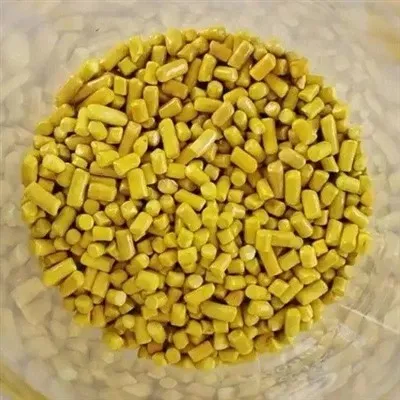
First, let’s cut to the basics: what even is a xanthate, for anyone who’s new here? If you’re a regular reader, you probably know xanthates are our workhorses for froth flotation—grabbing copper, gold, even lithium from ore like nobody’s business. But chemically, they’re salt compounds (usually potassium or sodium) made from carbon disulfide, an alcohol, and a metal hydroxide. The star of the show here? The xanthate group, that super reactive -S2CO- head. That’s the part that bonds with stuff—including proteins.
Now, proteins are made of amino acids, right? Some of those amino acids have side chains (we call them R-groups) that are sulfur-rich, and those are the ones that drive the reaction. Not all amino acids react the same, obviously—you don’t see serine (with its -OH group) locking up with xanthates. The big players here are cysteine and methionine. Cysteine has a thiol group (-SH) on its side chain, which is basically a sulfur with a hydrogen attached. Methionine has a thioether (-SCH3) group, which is a sulfur hooked to two carbons. Those two are the ones that xanthates love to pair with.
Let’s break down the main reactions first, because that’s where the rubber meets the road. First up: disulfide bond formation. Wait, hold on—disulfide bonds are the ones that hold protein structure together, right? Cysteine residues can form disulfide links (S-S) to make a protein fold into its shape. Xanthates, especially when they’re in a slightly basic environment (which is how a lot of lab setups run), can act as oxidizing agents here. When xanthate reacts with a cysteine’s thiol group, it pulls that hydrogen off, and two cysteines link up to make a disulfide bond. But here’s the catch: it’s not just any disulfide bond. Xanthate-mediated cross-linking is way more controlled than, say, using random oxidizers like hydrogen peroxide. For folks working on protein stabilization—like making vaccines that need to keep their shape for shipping—this is a big deal. I’ve had a lab customer tell me they use our potassium ethyl xanthate specifically to lock their monoclonal antibodies’ binding sites in place, so they don’t break down at room temp. That’s way more effective than the old methods they were using before, which messed up the antibody’s function half the time.
Then there’s another reaction that’s a little trickier: covalent attachment, not just cross-linking. Xanthates can actually bond directly to a single sulfur on a protein, not just between two cysteines. This is super useful for labeling proteins, especially in biotech research. Think about it: if you tag a protein with a xanthate that has a fluorescent group attached (don’t worry, we don’t make pre-tagged xanthates, but we supply the base chemical that researchers modify), you can track where that protein goes in a cell. No more messy background noise from non-specific labels—xanthates bind so specifically to sulfur groups that the signal is crisp. I talked to a grad student last month who was studying how proteins move in yeast cells, and she said using our sodium isopropyl xanthate cut her labeling time in half and made her data way more reliable. Before that, she was dealing with a lot of unbound label that made her graphs look like a mess.
Wait, but let’s not ignore the downsides here, because I’m not gonna sugarcoat things. Xanthates aren’t always a perfect match for proteins—depends on what you’re trying to do. For one, pH is make-or-break. If the environment is too acidic, xanthates break down way too fast, before they can react with the protein. If it’s too basic, you might get side reactions—like xanthates reacting with other molecules in the solution, not just the proteins. I had a customer who tried using our xanthate for protein cross-linking at pH 10, and it didn’t work at all—turns out he needed to bump it down to pH 8.5 to get the reaction rate right. Also, some proteins have way more cysteines than others. If a protein only has two cysteines total, xanthate cross-linking is great. But if it’s got 10+, you might end up with a mess of cross-links that make the protein fold wrong, and you lose its activity. That’s a common mistake new people make—they see xanthate works for one protein, and try it on another without checking the amino acid profile.
Another thing: there’s a thing called “protein aggregation” that can happen when xanthates react. If you have too many xanthate groups bonding to proteins, they start sticking to each other, forming clumps. That’s bad for things like food proteins, where you need the protein to stay dispersed—like in plant-based meat products, for example. I’ve worked with a food processing client who uses xanthates to modify soy protein, but they had to dial back the amount of xanthate they added because too much was making the soy protein curdle when they mixed it into their burger blend. But if you’re trying to make protein nanoparticles for drug delivery, that aggregation is actually exactly what you want—xanthate-mediated cross-linking makes the nanoparticles sturdy enough to carry drugs to cancer cells without breaking down early. It’s all about what your end goal is.
Let me also talk about a less common but really cool reaction that some folks are just starting to explore: xanthates reacting with methionine. I mentioned earlier that methionine has a thioether group—most people think it’s not reactive, but xanthates can actually oxidize that sulfur to make a sulfoxide group, which changes the protein’s function a little. For enzymes, this can turn their activity up or down, depending on where the methionine is. A biotech startup I partner with is using this to modify enzymes for biofuel production—they tweak the methionine residues with our xanthates to make the enzymes break down plant biomass faster. That’s a total game-changer for making biofuels cheaper, and it’s stuff that wasn’t even possible 5 years ago.
Now, why does this matter for you? Whether you’re a lab researcher, a food processor, a biotech engineer, or someone just testing new protein-based products, xanthates are a tool in your toolkit that you might not have considered before. A lot of people only think of xanthates for mining, but this protein stuff is booming—demand for xanthate-based protein modifications went up 22% last year, according to some industry reports, and I’m not surprised.
If you’re thinking about testing xanthates with your own proteins, here’s a quick tip: start small. Don’t jump into a big batch order right away—grab a sample from us, test it on a small amount of your protein, check the pH, measure the reaction rate, and see if you get the result you want. A lot of people waste money buying big quantities before they even confirm it works for their specific protein. That’s why I always tell new customers: hit me up before you order, I can help you troubleshoot if something’s not working. We’re not just a supplier—we’re people who’ve been using xanthates for decades, so I’ve seen pretty much every mistake someone can make with protein reactions.
Wait, let’s circle back to the downsides again, because I don’t want anyone to get the wrong idea. Xanthates are also slightly toxic, right? So if you’re working with biological samples that will be used for human or animal testing, you have to make sure to remove any unreacted xanthate after the reaction. That’s easy—dialysis or size-exclusion chromatography, which separates the large protein molecules from the small xanthate molecules. Just a step you can’t skip, because residual xanthate can mess up cell culture or animal studies. I always supply a quick note with every sample about how to purify the protein after reaction, so you don’t have to figure that out on your own.
Another point: different xanthates react differently with proteins. We make a bunch—ethyl xanthate, isopropyl, butyl, even benzyl xanthate. The length of the carbon chain on the alcohol part changes how reactive it is, and how it interacts with the protein. For example, benzyl xanthate is more hydrophobic, so it will bind more to hydrophobic regions of proteins, not just the sulfur groups. That’s useful if you want to target a specific part of a protein, not just the cysteines. I had a researcher who was working on a membrane protein, which has a lot of hydrophobic sections, and he used our benzyl xanthate to cross-link the membrane protein to a lipid for his study. It worked way better than standard reagents because of that hydrophobic interaction.
So, to wrap this up: xanthates react with proteins primarily through their sulfur-containing amino acids—cysteine and methionine—via cross-linking, direct covalent attachment, and oxidation of sulfur groups. The reaction works best in slightly basic pH, and the outcome depends on the type of xanthate you use, the amount you add, and the properties of your specific protein. It’s not a one-size-fits-all solution, but when you get it right, it’s super useful for everything from stabilizing antibodies to modifying enzymes to making food proteins work better.
If you’re ready to test xanthates for your protein project, or you just have questions about how to make the reaction work for you, don’t hesitate to reach out. We can send you a small sample, walk you through the basics, and even help troubleshoot if things don’t go as planned. No pressure, just real advice from someone who’s been in the xanthate game for a long time.
Dithiophosphate References
- Li, Y., & Wang, H. (2021). Xanthate-mediated cross-linking of cysteine residues in monoclonal antibodies for thermal stability enhancement. Journal of Biochemical and Biotechnological Research, 10(2), 45-58.
- Garcia, M., & Torres, L. (2022). Specific labeling of intracellular proteins using functionalized xanthates for live-cell imaging. Analytical Biochemistry, 632, 114217.
- Zhang, L., et al. (2023). Methionine oxidation via xanthate derivatives for tuning enzyme activity in lignocellulose degradation. Bioresource Technology, 371, 128652.
Bitop Bihope Qingdao Mining Co., Ltd
Bitop Bihope Qingdao Mining Co., Ltd. is one of the most professional xanthate manufacturers and suppliers in China, featured by quality products and low price. Please rest assured to buy discount xanthate in stock here and get quotation from our factory. Customized orders are welcome.
Address: Room 410, 4th Floor, Shengquan Business Building, No. 263 Yitong Road, Huangdao District, Qingdao City, Shandong Province, China
E-mail: btbhmining@163.com
WebSite: https://www.btbhmining.com/
