If you’ve ever stood in front of a custom hydraulic setup, a food processing line, or a heavy-duty fluid transfer station and wondered, “How long can that EPDM hose actually be?” you’re not alone. As an EPDM hose supplier who’s spent the better part of a decade helping engineers, plant managers, and maintenance teams design systems that hold up to years of use, I get this question at least once a week. It’s not a trivial one, either. The maximum length of EPDM hose available doesn’t just depend on what a factory can roll up on a machine—it ties into material science, manufacturing constraints, and real-world application limits that can make or break a project. EPDM Hose
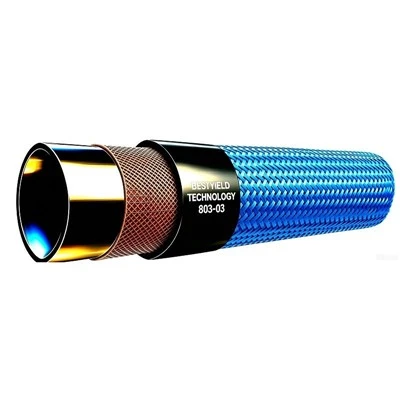
Let’s start with the basics: EPDM stands for ethylene propylene diene monomer, a synthetic rubber known for its resistance to weather, ozone, temperature swings, and mild chemicals. That’s why it’s so popular for everything from water supply lines to automotive cooling systems to industrial wastewater transfer. But when it comes to length, manufacturers can’t just keep spooling hose indefinitely. The maximum practical length falls between two key numbers, and it’s not a one-size-fits-all answer. For standard industrial EPDM hose, the maximum length you can get in a single continuous run is generally 150 meters (about 492 feet). That’s the upper limit most suppliers, myself included, offer for most common hose sizes—from ½ inch up to 4 inches in diameter. But wait, there are exceptions, and a lot of factors tweak that number.
First, let’s break down why 150 meters is the sweet spot for continuous EPDM hose. The manufacturing process starts with mixing the EPDM compound, then extruding it through a die to form the inner tube, adding reinforcement layers (usually polyester or fiberglass braids for pressure resistance), and then wrapping the outer EPDM cover. Once the layers are built, the hose is vulcanized—heated to cure the rubber so it holds its shape and properties. The vulcanization process happens in a continuous oven, and the length of that oven limits how much hose you can run through in one go. Most standard vulcanization ovens for EPDM hose are built to handle up to 150 meters of product before the end exits the oven. Longer than that, and you risk uneven curing—sections of the hose will be under-cured (soft, prone to leaks) or over-cured (brittle, cracking under pressure). For smaller diameter hoses, sometimes a few meters more is possible, but once you go above 2 inches in diameter, the weight of the hose itself becomes a problem. A 4-inch EPDM hose can weigh 2 kilograms per linear meter, so 150 meters is 300 kilograms (more than 660 pounds) of continuous hose. Handling that weight during manufacturing without stretching or kinking it is extremely difficult, so the 150-meter cap sticks for larger sizes.
But here’s where it gets interesting: some specialty EPDM hoses can go longer. For low-pressure applications—like gravity-fed water lines or ventilation ducts—we can offer continuous lengths up to 200 meters (656 feet). Why? Because those hoses use less robust reinforcement, and vulcanization for low-pressure compounds can be adjusted to allow slightly longer runs. We recently did a project for a municipal park that needed a long, continuous hose to run from a well to a series of new irrigation zones—they didn’t want multiple couplings (which are potential leak points), so we ran a 180-meter length of low-pressure EPDM hose to meet their needs. That’s a perfect example of how application changes the maximum available length. On the flip side, high-pressure EPDM hoses—like those used in hydraulic systems or for high-temperature steam transfer—can’t hit that 150-meter mark. Most high-pressure EPDM hose tops out at 100 meters (328 feet) continuous. The tight reinforcement (steel braids or multiple layers of fiber) and thicker EPDM walls require even more precise curing, so extending the length leads to more defects that compromise pressure resistance.
Now, you might be thinking: “What if I need 300 meters of hose? Can’t I just splice two lengths together?” You can, but that’s where the practical limits of length come into play. Splicing EPDM hose isn’t just cutting two ends and gluing them—it requires cleaning, applying a bonding agent, and curing the splice to match the hose’s original strength. A poorly done splice can fail under pressure, especially for high-temperature or chemical applications. That said, many of our customers choose spliced lengths for projects where even 150 meters isn’t enough. We often supply hoses up to 500 meters total by splicing multiple continuous runs, as long as the splices are done in controlled conditions by our trained technicians. But that’s not a single continuous length, so it’s important to distinguish between what’s available as one unbroken piece versus a spliced assembly.
Another common question: can I get custom lengths that are shorter than the maximum? Absolutely. Most suppliers, including us, sell EPDM hose in any length down to 1 meter (3.3 feet) as needed, as long as it’s within the continuous manufacturing run. So if you only need 50 meters for a small project, you won’t be stuck buying a full 150-meter spool. That flexibility is key for both small business customers and large industrial operators who only need a portion of a full run.
Now, let’s talk about the factors that buyers often overlook when considering EPDM hose length. The first is installation. A 150-meter hose is great on paper, but how are you going to handle it on site? Unspooling 150 meters of heavy hose requires heavy-duty equipment—spool carts, forklifts, even cranes for large diameter hoses. If your installation team only has tools for handling shorter lengths, a continuous 150-meter hose might cause more problems than it solves. Kinks during unspooling, excessive weight that strains fittings, and difficulty routing the hose around corners or obstacles are all risks. That’s why sometimes a few shorter lengths, spliced properly, are a better practical choice than a single maximum-length run.
Another factor is application-specific requirements. For food and beverage processing, EPDM hose has to meet FDA standards, and these hoses often have thinner walls for flexibility. The maximum length for FDA-compliant EPDM hose is usually 100 meters, not 150. The thinner tube is more prone to stretching during manufacturing, so longer runs can’t maintain consistent inner diameter, which is critical for food flow. For medical applications, it’s even stricter—most medical EPDM hose is limited to 50-meter continuous lengths to ensure purity and uniform wall thickness.
Outdoor applications, like roofing EPDM hose for rainwater collection or outdoor HVAC lines, have their own limits. UV-resistant EPDM hose can be manufactured in longer lengths, up to 180 meters, because the outer cover is thicker and more durable, allowing it to handle the stress of longer runs. But if that outdoor hose is also carrying hot water, the maximum length drops back to 120 meters, because heat accelerates any curing inconsistencies in longer runs.
I’ve seen firsthand how choosing the wrong length can cause headaches. A few years back, a customer in the agricultural sector ordered a 150-meter EPDM hose for a sprinkler system. They tried to unspool it manually, and within 100 meters, the hose kinked, causing a leak that shut down their irrigation for three days during harvest season. We ended up cutting the hose into three 50-meter lengths, splicing them on site, and it worked perfectly. That experience taught me that it’s not just about the maximum available length—it’s about matching the length to the installation capability, not just the manufacturer’s capabilities.
Now, let’s address common myths around EPDM hose length. Some people think that longer lengths are always cheaper, because you’re buying less waste from the supplier. That’s not true. Larger, longer runs require more materials, more precise manufacturing, and more testing, so the price per meter actually goes up as length increases. A 150-meter spool of 3-inch EPDM hose costs significantly more than three 50-meter spools, even when you account for the splice. So for most projects, ordering exactly the length you need is more cost-effective than buying a full maximum-length spool. Another myth: you can cut a longer hose to a shorter length after you install it. You can, but cutting EPDM hose removes the outer cover, so you have to cap the cut end properly to prevent moisture or contaminants from getting inside the tube. That adds extra time and materials, so it’s better to order the correct length upfront.
So, to circle back to the original question: what’s the maximum length of EPDM hose available? For most general-purpose industrial applications, it’s 150 meters (492 feet) for continuous runs. For specialty low-pressure or UV-resistant applications, it can go up to 200 meters (656 feet). For high-pressure, FDA-compliant, or medical-grade EPDM hose, the maximum is lower, usually between 50 and 100 meters. Spliced assemblies can extend that total length, but they require careful installation to avoid leaks or failures.
At the end of the day, the best length for your project isn’t just the maximum available—it’s the length that balances manufacturing capability, installation practicality, and cost. If you’re planning a project and you’re not sure which EPDM hose length is right for you, whether you need a small 10-meter spool or a 150-meter custom run, I’m here to help. I’ve worked with thousands of customers to navigate these choices, and I can walk you through the pros and cons of different lengths, provide testing data on our continuous runs, and even connect you with installation resources if needed. Don’t waste time guessing which length will work—reach out, share your application details, and we can find the perfect EPDM hose solution for your needs.
Pre-formed Rubber Hose References:
- ASTM International. (2019). Standard Specification for EPDM Rubber Hose for General Industrial Use. ASTM D2000-19.
- Rubber Manufacturers Association. (2021). EPDM Hose Manufacturing Processes and Performance Limits. RMA Technical Report Series.
- Food and Drug Administration. (2020). Compliance Policy Guide for Food Contact Substances: Rubber and Rubber Products. CPG 7117.06.
- International Organization for Standardization. (2018). Rubber Hoses and Hose Assemblies for Hydraulic Power Transmission. ISO 1436-18.
- European Rubber and Thermoplastic Elastomers Association. (2022). EPDM Hose Application Guidelines for Outdoor and Weather-Resistant Systems. EURTA Technical Bulletin.
BESTYIELD Technology (Huizhou) Co., Ltd.
BESTYIELD Technology (Huizhou) Co., Ltd. is one of the most professional epdm hose manufacturers and suppliers in China, featured by quality products and good price. Please rest assured to buy durable epdm hose made in China here and get quotation from our factory. Customized orders are welcome.
Address: Yinshan Industrial Zone, Liangjing Town, Huiyang District, Huizhou City, Guangdong Province
E-mail: rick@bestyield.net
WebSite: https://www.bestyield.org/
