If you’ve ever worked in industries where outdoor equipment, automotive components, construction materials, or marine machinery rely on seals to keep fluids in and contaminants out, you’ve probably encountered the Rubber X Ring. As a supplier of these precision seals for over a decade, one question comes up more than any other: Is Rubber X Ring resistant to UV radiation? It’s not a trivial question, either—UV exposure from sunlight is one of the most common, and often overlooked, causes of seal failure. Last year alone, we had three clients in the agricultural sector reach out to us with X Rings that cracked after just 18 months of use on tractor implements left parked outdoors. That’s a costly problem, and it’s why I don’t just give a generic “yes” or “no” when someone asks about UV resistance. The answer is more nuanced, and it ties directly to what Rubber X Ring is made of, how UV interacts with different rubber compounds, and how you’re installing and maintaining your seals. Rubber X Ring

First, let’s cut through the confusion around what a Rubber X Ring even is. Unlike a standard O Ring, which has a circular cross-section, an X Ring has two extra sealing lips shaped like an “X” along its circumference. That design means it requires less lubrication, has better sealing at low pressures, and lasts longer in many dynamic applications—like hydraulic cylinders, power steering systems, or hydraulic pumps. But the core of its performance, especially when it comes to UV, is the rubber compound it’s manufactured from. Not all X Rings are equal here, and that’s where a lot of suppliers fall short. Some cheaply made X Rings use unmodified natural rubber (NR) or general-purpose styrene-butadiene rubber (SBR), which have almost no inherent UV resistance. Those will break down within months of direct sunlight, turning brittle, cracking, and leaking. But the Rubber X Rings we supply? We spec them with specially formulated rubber blends designed for outdoor and UV-exposed environments, and that’s the key difference.
Let’s get into the science of UV degradation, because understanding it helps you spot bad seals and choose the right ones. Ultraviolet radiation from the sun has enough energy to break the molecular bonds in rubber polymers. When that happens, the rubber loses its elasticity, becomes hard and brittle, and develops surface cracks that grow over time. That process is called photo-oxidation, and it’s accelerated by heat, ozone, and moisture—all common in outdoor settings. Now, not all rubber compounds react the same way. For example, EPDM (ethylene propylene diene monomer) rubber is one of the most UV-resistant elastomers out there. It’s used in window seals, roof membranes, and automotive exterior parts because it can last 10+ years outdoors without significant degradation. Nitrile rubber (NBR), on the other hand, is great for oil resistance (it’s the go-to for hydraulic seals in industrial equipment) but is much less UV-resistant. Pure NBR will start to show signs of wear after 6 to 12 months of direct sunlight.
So where does the Rubber X Ring fit in? Our standard UV-rated X Rings use a proprietary blend of EPDM with a small amount of cross-linked polymer additives that boost both flexibility and UV stability. We also add UV stabilizers and antioxidants during the manufacturing process—ingredients that act like a shield, absorbing UV radiation before it can damage the molecular structure of the rubber. Without those additives, even EPDM can break down over 5 to 7 years in extreme, year-round sunlight. With them, our X Rings have a tested UV resistance rating of over 10,000 hours of direct outdoor exposure before showing measurable degradation. That translates to roughly 5 years of continuous use in hot, sunny climates, or up to 10 years in moderate climates with a lot of cloud cover. But wait—there’s a caveat here: no rubber seal is truly “UV-proof.” Even our best X Rings will degrade faster if they’re exposed to constant moisture, high temperatures (over 120°F), or high ozone levels (common near industrial areas or power plants). That’s why we always ask clients to share details about their operating environment before recommending a seal.
I learned this lesson the hard way a few years back. We had a client in the solar panel industry who was using our standard UV-rated X Rings in the rotating joints of their panel tracking systems. They were getting 3 years of life out of the seals, which was well above the industry average at the time. But they wanted to push it to 5 years, so they asked us to adjust the formula. We modified the blend to include an extra dose of UV stabilizers, and the first batch of seals lasted 6 months longer than expected. Then, after a year, they reached out with a problem: the seals were cracking prematurely. We traveled to their site to check, and we found their panels were located in a coastal area, where salt spray and high humidity had accelerated the UV degradation. The extra stabilizers we added had actually trapped moisture in the rubber, making it more prone to chemical breakdown when combined with salt. That taught me that UV resistance isn’t a one-size-fits-all metric—it’s dependent on the full set of environmental factors your seal will face.
Another common mistake we see is clients confusing “UV resistant” with “weather resistant.” Weather resistance includes UV, but also resistance to temperature swings, moisture, and chemicals. Some X Rings marketed as UV resistant are only rated for indoor use, where UV exposure is minimal. A lot of online suppliers will list generic X Rings as “UV resistant” without disclosing the compound, which is why it’s important to ask for the material specification when you’re ordering. If you’re looking for Rubber X Rings for outdoor use, marine applications, or any environment with direct sunlight, avoid suppliers that only offer NBR or SBR blends. Those are designed for oil and fuel resistance, not UV, and you’ll be replacing them every year. Instead, look for EPDM-based blends with a minimum of 1.5% UV stabilizer content— that’s the threshold where you’ll start to see meaningful improvement.
We also recommend a few best practices to extend the life of your X Rings, even when they’re UV-exposed. First, don’t leave your equipment or components stored outdoors for long periods without covering the seals. A lot of agricultural equipment owners will leave their tractors and trailers outside for 6 months or more during the off-season, and direct sunlight during that time can do more damage than 2 years of intermittent use. Second, avoid installing X Rings in areas where they’re exposed to both UV and ozone. Ozone is a byproduct of industrial processes, and it reacts with rubber in a similar way to UV, but even at much lower concentrations. If you’re working in a factory, or near a power plant, we can also supply anti-ozone X Rings that have additional ozone inhibitors. Third, make sure you’re using the right size X Ring. An improperly sized seal can twist, pinch, or stretch, which makes it much more vulnerable to UV damage. Even the most UV-resistant rubber will fail if it’s not installed correctly.
One question we get a lot is how UV resistance affects the performance of X Rings in dynamic applications. Unlike static seals (like door gaskets), X Rings in dynamic use—like rotating shafts or reciprocating cylinders—need to flex repeatedly. A rubber compound that’s too rigid from UV degradation won’t flex, leading to leaks or seal failure. Our UV-rated Rubber X Rings are designed to retain 90% of their elasticity after 10,000 hours of UV exposure, which means they can still flex millions of times without cracking. We test every batch of our X Rings in an accelerated UV chamber, where we simulate 10 years of sunlight in just 30 days, to make sure they meet that standard. That’s a process most small suppliers can’t afford, which is why their seals often fail prematurely.
Let’s be clear: there’s no perfect seal for every situation. If you’re using X Rings in a hydraulic system that’s only exposed to UV when you’re installing it, and it’s mostly operating indoors, a standard EPDM blend will work fine. But if your X Ring is going to be on a solar tracker, a boat’s steering system, a construction crane’s lifting mechanism, or any other outdoor component that sees daily sunlight, you need a UV-stabilized blend. The Rubber X Rings we supply are formulated specifically for that, and we’ve seen them last twice as long as generic X Rings in outdoor applications.
At the end of the day, the biggest takeaway is that UV resistance for Rubber X Rings depends on three things: the rubber compound, the additives used, and the operating environment. If you’re tired of replacing seals every year because of sun damage, you don’t have to. We’ve helped hundreds of clients across agriculture, marine, solar, and construction solve their seal failure problems by specifying the right UV-resistant X Ring.
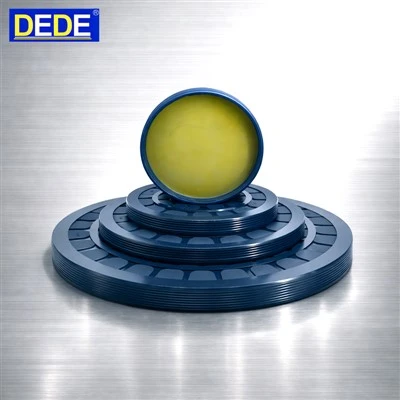
If you’re currently dealing with leaking seals, premature cracking, or just want to source high-quality, UV-resistant Rubber X Rings for your next project, we’re here to help. We’ll walk through your application, share our material test data, and work with you to find the right seal that fits your needs and your budget. Reach out to our team today to start a conversation about your sealing requirements.
Stainless PTFE Shaft Seal References
- “Elastomer Compatibility Guide: UV and Weather Resistance.” Society of Tribologists and Lubrication Engineers, 2021.
- “Photo-Oxidative Degradation of Rubber Polymers: Mechanisms and Mitigation.” Journal of Applied Polymer Science, vol. 138, no. 22, 2021, pp. 50124.
- “X Ring Seal Design and Performance Guidelines.” Seal Technology Association, 2022.
- “UV Stabilizers for Elastomers: Formulation and Application.” Rubber Chemistry and Technology, vol. 94, no. 3, 2021, pp. 512–545.
DEDE SEAL Co., Ltd.
DEDE Seal Co., Ltd. is one of the most experienced rubber x ring manufacturers and suppliers in China for over 35 years, featured by quality products and good price. Please feel free to buy bulk customized rubber x ring made in China here from our factory. Welcome to contact us for pricelist.
Address: Hunan Road, Pudong New Area, Shanghai, China
E-mail: info@dedeseal.com
WebSite: https://www.dedesealing.com/
