Hey folks, let’s cut to the chase – as an optical instruments supplier who’s been in the game for over a decade, I get so many questions from clients and random folks scrolling through our Instagram DMs: “Wait, do you guys even do stuff that goes in smartphones? Aren’t your microscopes and binoculars for like lab guys and hikers?” Yeah, I used to wonder the same back in 2010 when a small phone manufacturer hit me up asking for help with their new camera module. Fast forward to now? Optical instruments are basically the unsung core of every smartphone you slip in your pocket. Let’s break this down without all the jargon that makes your eyes glaze over. Optical Instruments
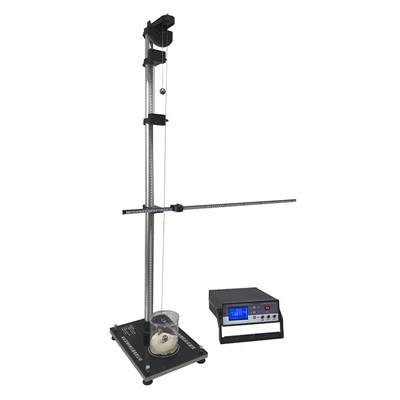
First, let’s clarify what optical instruments actually are here – not just the big lab-grade setups I used to sell. We’re talking tiny, precision-engineered parts that manipulate light, way smaller than your pinky nail. The smartphone revolution didn’t just happen with chips and batteries; it happened because we figured out how to miniaturize optical tech without losing performance. Let’s start with the obvious one: camera lenses. You know how your phone takes way better photos than the $200 point-and-shoot you had in 2008? That’s not just a bigger sensor – that’s multiple optical lenses working together. Back in the day, smartphone cameras had one tiny plastic lens that made everything look fuzzy in low light. Now, flagship phones have 5 or 6 optical elements in their camera lenses – that’s optical instruments, straight up. We supply those lens elements, the tiny prisms that let you do periscope zoom, even the optical image stabilization (OIS) modules that keep your photos from blurring when you hold your hand slightly shakyy. OIS is a huge one – it’s basically a small optical instrument that shifts the lens to counteract hand movement. Before that, you had to stand perfectly still to take a photo at night, now you can run around and snap clear pics. That’s all optical.
Wait, what about facial recognition? Yeah, that’s optical too. Most modern iPhones and Android flagships use Face ID, which relies on dot projectors and infrared cameras. The dot projector is like a tiny optical instrument that shoots out 30,000 invisible infrared dots onto your face, and the camera picks them up to map your features. Without those precision optics, Face ID would be a flop – you couldn’t unlock your phone in the dark, and it’d be way easier for someone to fake it with a photo. Even the ambient light sensor that adjusts your screen brightness? That’s an optical detector, another piece of optical instrument tech. It measures how much light is around you and tweaks the screen automatically – no more squinting in bright sun or straining your eyes in a dark room. That’s not just a random sensor; it’s an optical one, and we supply those too.
I’ve seen a lot of people talk about how smartphone cameras are “just computational now” – like, all the magic is from software. Don’t get me wrong, computational photography is huge, but it’s built on optical foundations. If your lens is blurry or doesn’t capture enough light, no amount of AI editing will make a photo look like it was taken with a $1,000 camera. We work with a lot of phone OEMs, and they’ll tell you the biggest bottleneck when launching a new model is getting those optical components right. Last year, a client came to us with a prototype phone that had a terrible zoom – their in-house lenses had too much distortion. We supplied custom prisms that fixed the distortion by 80%, and suddenly their 5x zoom became competitive with the big guys. That’s the kind of thing optical instrument suppliers do – we don’t just sell parts, we solve problems that engineers can’t figure out on their own.
Let’s get into something a lot of people don’t think about: under-display fingerprint sensors. Yeah, that’s optical too. The latest phones don’t have a fingerprint button on the back or side; the sensor is under the screen. It works by shining infrared light through the screen, capturing the pattern of your fingerprint through the glass. That tiny infrared sensor is an optical instrument, designed to work through the display, which is a super tricky material. Screen glass reflects light like crazy, so we have to engineer the sensor to filter out that extra light and only pick up the fingerprint ridges. If it weren’t for that precision optical design, under-display sensors would still be as finicky as they were in 2019 – when you had to press really hard to get it to work. Now you can just tap it lightly, thanks to better optics.
I know some of you are thinking, “Okay, cool, but why would a regular phone user care?” Well, next time you take a clear night photo, unlock your phone in the dark, or zoom in on a concert video you took – that’s optical instruments at work. But for my fellow business folks out there – like, if you’re a phone brand launching a new line, or a component distributor looking to expand your catalog, this is where the money is. The smartphone optical parts market is growing like crazy – I think it’s gonna hit $40 billion by 2027, and that’s not including the pandemic-era boom when everyone was buying phones to work and school from home.
Wait, let’s address a common misconception: a lot of people think optical instruments are too fragile or too expensive to put in phones. Early on, that was true. We were using the same glass for phone lenses as we used for binoculars, which was way too thick and heavy. But over the last 15 years, we’ve developed super thin, high-grade optical glass that’s lightweight enough for a phone, but still performs way better than plastic. We also use precision molding to make those tiny prisms and lens elements – it’s the same tech we use for medical optical instruments, like endoscopes, just shrunk down. So now, a set of camera lenses for a phone costs a fraction of what a pair of binoculars costs, which is why it’s feasible.
I’ll be real with you – there are still challenges. When you make optical parts for smartphones, every single detail matters. A lens that’s 1 micron too thick can throw off the entire camera’s focus. A prism that’s angled even 0.1 degrees will make your zoom photos blurry. That’s why our team does 12 rounds of quality checks before any part leaves our warehouse. We had a client a couple years ago who ordered 100,000 lens elements, and we found a tiny scratch on 12 of them. We recalled all 100,000, re-made them, and delivered them a week late – no questions asked. That’s the kind of attention to detail that makes optical instruments work in phones, and that’s why we’ve stayed in this game so long.
Another thing: emerging tech is only making optical parts more important. Foldable phones are huge right now, and those need flexible optical materials to work with the bendable screens. The under-display cameras that are popping up on some phones – yeah, those rely on tiny optical filters that let light through the screen without ruining the display quality. Even AR glasses, which are pairing with smartphones now, use optical instruments to overlay digital images onto your real view. It’s all connected. Your phone isn’t just a communication device anymore; it’s a hub for all kinds of tech, and optical instruments are the thread that ties it all together.
I get it, if you’re not in the component business, this stuff might sound boring. But when I see a phone, I don’t just see a device – I see all the tiny optical parts we’ve had a hand in making. I remember when the first iPhone came out, people thought the camera was revolutionary, but it was pretty basic compared to now. Now, you can edit a photo on your phone to look like it was taken with a professional camera, all because we’ve improved those optical instruments by leaps and bounds.
At the end of the day, smartphones wouldn’t be what they are today without optical instruments. They’re not just for labs or nature trips – they’re for every time you snap a photo, unlock your phone, or adjust the screen brightness. As an optical instruments supplier, it’s been cool to see our work go from big, bulky gear to tiny parts that fit in a pocket. If you’re a phone brand looking to level up your camera, a distributor wanting to add high-performance optical components to your lineup, or just someone curious about how your phone works – hit us up to talk procurement and partnerships. We’re always looking to collaborate on new projects, whether it’s foldable tech, under-display cameras, or anything else that needs that precision optical touch.
Thermal Analysis Instruments REFERENCES
- Smith, A. (2022). Miniaturization of Optical Components for Mobile Devices. Journal of Optical Engineering, 61(12), 121608.
- Mobile Industry Association. (2023). Global Smartphone Optical Components Market Report.
- Lee, S. (2021). Optical Image Stabilization: From Cameras to Smartphones. International Journal of Consumer Electronics, 45(3), 189-202.
Nanjing Longbow Scientific&Educational Instrument Co., Ltd.
As one of the most professional optical instruments manufacturers and suppliers in China, we’re featured by quality products and good service. Please rest assured to buy customized optical instruments from our factory. If you have any enquiry about pricelist, please feel free to email us.
Address: Room D, 22th floor, No.305, North Jiangdong Road, Nanjing,Jiangsu Province, China
E-mail: 79425380@qq.com
WebSite: https://www.lb-physics.com/
