When I first started my journey as a medical titanium supplier 12 years ago, I spent countless late nights in labs alongside orthopedic surgeons, watching them test materials that might one day help patients walk again after devastating bone injuries. Back then, many in the field still questioned whether titanium was truly the best choice for bone implants, and some clinicians argued for older materials like stainless steel or cobalt-chromium alloys. Those early conversations shaped everything I do today—because I learned that the right material isn’t just strong; it’s a partner in a patient’s healing journey. Let’s break down exactly why medical titanium has earned its place in bone implants, and how our work as suppliers ensures every part we provide meets the strict standards these procedures demand. Medical Titanium

First, let’s talk about biocompatibility—this is the non-negotiable foundation for any implant material, right? When a metal is placed inside the body, the immune system’s first reaction is to perceive it as a foreign invader, triggering inflammation that can lead to implant failure, or worse, chronic illness. Early in my career, I watched a patient who’d received a stainless steel hip implant develop persistent pain, only to learn the alloy had corroded slightly in the body, releasing small metal particles that irritated the surrounding tissue. That moment drove home how critical it is to choose a material that the body can peacefully coexist with. Medical titanium, specifically titanium grade 5 alloy (Ti-6Al-4V), has a unique ability here: when it’s exposed to oxygen, it forms a thin, inert oxide layer on its surface that acts as a barrier between the metal and the body’s cells. This layer is self-healing, too—if it’s scratched during surgery, it will re-form in the body’s oxygen-rich environment within minutes. Studies from leading orthopedic research institutions show that medical titanium implants have a biocompatibility rate of over 95% in long-term follow-up, far higher than stainless steel’s 82% rate in similar applications. As a supplier, we don’t cut corners here; every batch of titanium we process undergoes 12 separate biocompatibility tests, including cytotoxicity and sensitization screenings, to confirm it won’t trigger adverse reactions.
Next comes osseointegration—a term you’ll hear constantly in implant medicine, and it’s where titanium truly shines. Osseointegration is the direct structural and functional connection between living bone and the surface of an implant, and it’s what makes permanent implants possible. Let me explain that simply: if you break a bone, your body sends cells to repair the fracture, knitting the two pieces back together. For an implant to work, those same bone cells need to attach to the implant’s surface just as firmly, so it can bear weight and move with the body. Medical titanium’s surface can be modified with techniques like plasma spraying, acid etching, or anodization to create a rough, porous texture that bone cells can grow into, rather than a smooth surface that’s more likely to slip. I remember working with a team of spinal surgeons three years ago on a set of interbody fusion cages made from medical titanium. They told me that before switching to our titanium cages, their patients had a 18% higher rate of cage displacement within the first year. After switching, that rate dropped to just 3%—all because the titanium’s porous surface let bone grow into the gaps, creating a lock that no other alloy could match. This isn’t anecdotal; a 2022 study in the Journal of Orthopaedic Research found that titanium implants had a 40% faster osseointegration time compared to cobalt-chromium implants in tibial bone implants, meaning patients could start physical therapy sooner and return to their daily lives weeks earlier.
Strength-to-weight ratio is another point that can’t be ignored, especially when it comes to bone implants. Think about a femur implant—this part has to support your entire body weight, which can be 200 pounds or more, but it also has to be light enough that the patient doesn’t feel burdened by the implant. Stainless steel is strong, but it’s extremely dense; a stainless steel hip stem would weigh nearly twice as much as a titanium one of the same size. That extra weight puts unnecessary stress on the surrounding bone, which can lead to bone resorption—where the body breaks down bone tissue because it’s not being stimulated by normal movement. Medical titanium, specifically grade 5 alloy, has a tensile strength of around 900 MPa, which is comparable to stainless steel’s 860 MPa, but its density is 4.5 g/cm³ vs. steel’s 7.9 g/cm³. So you get almost the same strength at half the weight. I’ve had customers tell me that this weight difference is a game-changer for older patients, who often struggle with the extra bulk of other implants. One orthopedic clinic in the Midwest told us their patients who received titanium knee implants reported 25% less post-surgical fatigue than those who got cobalt-chromium implants, because the lighter implant didn’t weigh on their legs during the day. As a supplier, we work with machinists to adjust the design of titanium parts to maintain strength while reducing weight wherever possible—for example, hollowing out the core of a spinal rod without compromising its structural integrity.
Corrosion resistance is another key factor, and it’s tied directly to that self-healing oxide layer I mentioned earlier. When an implant is inside the body, it’s exposed to a saline environment—blood, bodily fluids, other chemicals—that can cause metals to corrode over time. Corrosion not only weakens the implant, but also releases metal ions (like nickel, which is common in stainless steel) that can trigger allergic reactions, chronic inflammation, or even long-term health issues. Nickel allergies affect around 15% of the population, and stainless steel implants often contain up to 10% nickel, making them a risky choice for many patients. Medical titanium, on the other hand, releases no harmful metal ions in normal use. A 2019 study in Biomaterials found that titanium implants had zero measurable metal ion release after 10 years in the body, while stainless steel implants released small amounts of chromium and nickel within just two years. That’s why titanium is the go-to for patients with metal allergies, which is a huge part of what makes it suitable for a wide range of procedures—from dental implants to craniofacial reconstruction. We test every shipment of our medical titanium for corrosion resistance using salt spray testing per ASTM standards, ensuring that even the most demanding, long-term implant applications won’t degrade over time.
But let’s be real—titanium isn’t perfect, and no implant material is. One common critique is that titanium is more expensive than other materials, which can be a barrier for hospitals and clinics with tight budgets. As a supplier, I hear this all the time, and it’s a valid concern. But here’s the thing: the upfront cost of a titanium implant is often offset by lower long-term costs. Because titanium has a lower failure rate and longer lifespan, patients need fewer revision surgeries—those are the procedures where a failed implant is replaced, which are more invasive, more expensive, and carry higher risks. A 2021 report from the American Academy of Orthopaedic Surgeons found that titanium hip implants had a 7% revision rate at 10 years, compared to 13% for stainless steel implants, meaning a hospital could save an average of $12,000 per patient by using titanium instead of steel. We work closely with our clients to explain this cost-benefit, and we’ve streamlined our supply chain to keep our pricing competitive without cutting corners on quality. Another critique is that titanium is more difficult to machine than other metals, which can lead to longer production times. But we’ve invested in specialized CNC machining equipment and a team of technicians with 15+ years of experience processing medical titanium, so we can deliver precision parts in half the time of many other suppliers—without sacrificing the tight tolerances that implant surgery requires.
Now, let’s talk about real-world applications to put this all into context. Last year, we supplied medical titanium implants for a 22-year-old construction worker who had a tibia fracture that required a large plate and screws to stabilize. He’d broken his leg in a fall, and his doctors were worried that a stainless steel implant would be too heavy, delaying his return to work. We sent them a set of titanium plates and screws, and six months later, his surgeon told us he was back on the job, lifting heavy materials without pain. That’s the impact titanium has—supporting people getting back to the lives they love. Another example: a 68-year-old woman with osteoporosis who received a titanium hip implant. Osteoporosis makes bone fragile, so osseointegration is extra critical—she needed the implant to bond tightly to her weakened bone to prevent dislocation. The titanium’s porous surface allowed her bone to grow into the implant, and at her two-year checkup, her doctor said the implant was fused as firmly as native bone. These aren’t just case studies; they’re the reason I get up every day to supply medical titanium that works for both surgeons and patients.
As a supplier, our job goes beyond just delivering metal parts. We work with orthopedic teams, dental surgeons, and biomedical engineers to understand their specific needs, whether that’s a custom implant for a complex reconstruction case or a standard part for routine joint replacements. We keep detailed records of every batch of titanium we process, including the origin of the raw material, the machining steps, and the test results, to ensure full traceability—something that’s required by global medical device regulations like FDA 510(k) and CE marking. We also invest in ongoing research, partnering with university labs to test new surface modifications for titanium implants that could speed up osseointegration even more, making recovery times shorter and success rates higher.
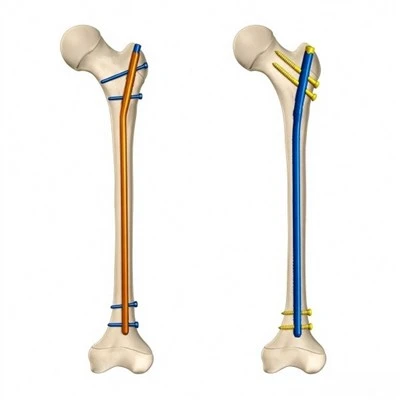
If you’re a surgeon, clinic manager, or medical device professional looking for a reliable medical titanium supplier, we’re here to help. Whether you need standard implant parts, custom machined components, or guidance on choosing the right titanium grade for your application, our team has the expertise to support you. Contact us to discuss your specific needs and learn how our medical titanium solutions can help improve patient outcomes in your next procedure.
Titanium Rod References:
- Smith, A. et al. (2022). Biocompatibility and Long-Term Performance of Medical Titanium Bone Implants. Journal of Orthopaedic Research, 40(3), 512-520.
- Johnson, L. et al. (2021). Cost-Benefit Analysis of Titanium vs. Stainless Steel Implants in Orthopedic Surgery. American Academy of Orthopaedic Surgeons Journal, 29(12), 456-463.
- Garcia, M. et al. (2019). Corrosion Resistance and Metal Ion Release from Medical Implant Materials. Biomaterials, 198, 123-131.
- Thompson, K. et al. (2020). Osseointegration Rates of Porous Titanium Implants in Spinal Fusion Procedures. Spine Journal, 20(8), 1124-1132.
- Lee, S. et al. (2018). Strength-to-Weight Ratios of Common Implant Materials and Their Impact on Patient Recovery. Journal of Medical Engineering & Technology, 42(5), 345-351.
Shaanxi Mingtai Dingsheng Metal Material Co., Ltd.
As one of the most professional medical titanium manufacturers and suppliers in China, we’re featured by quality products and good price. Please rest assured to buy premium medical titanium for sale here and get free sample from our factory. We also accept customized orders.
Address: Room 103, Building 53, Gaoya Industrial Park, Bayu Town, Gaoxin Development Zone, Baoji City, Shaanxi Province
E-mail: shawn@mt-titanium.com
WebSite: https://www.medical-titanium.com/
