If you’ve ever watched a warehouse robot zip across a concrete floor to pick up a pallet, or a DIY robotic arm sort small components with precise, steady movement, you might’ve noticed two things: the robot that lags mid-task often has a dim battery indicator, and the one that cruises through its routine runs on a fully charged pack. As a battery supplier who’s worked with robotics teams—from university engineering projects to industrial automation leaders—this isn’t a coincidence. It’s a direct, often misunderstood, relationship between battery voltage and motor performance that I’ve seen make or break a robot’s day-to-day function. Robot Battery
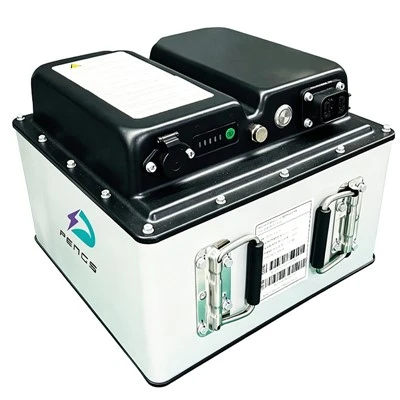
Let’s start with the basics, because most robot builders I talk to don’t just pick a battery based on size alone. Every DC motor that powers a robot’s wheels, arms, or grippers is designed around a specific operating voltage. That’s not a random number: when a motor is rated for 12V, its windings and internal components are calibrated to produce the right amount of torque (the twisting force that moves parts) and speed without overheating or burning out. If you feed that motor a voltage lower than its rating, you’re essentially giving it too little “push” to do its job. A 12V motor running on 9V, for example, will spin at roughly 25% slower speed, and its torque will drop even more significantly—usually to about 15% of its rated torque. That’s why a delivery robot might struggle to carry a full load of packages when its battery is at 9V, even if that battery still shows 75% charge on a typical coulomb counter. The charge meter doesn’t tell you voltage, but voltage is what makes the motor work.
But here’s where it gets more complicated: voltage isn’t static. Lithium-ion (Li-ion) batteries, the most common type for robotics because of their high energy density, don’t hold a flat voltage during their discharge cycle. A fully charged 12V Li-ion pack (nominal voltage, meaning the average during use) starts at around 12.6V, and drops steadily as it drains—hit 11.1V at 50% charge, 10.8V at 20% charge, and even lower as it approaches empty. That’s a critical detail I drill into every customer I work with: the relationship isn’t just “higher voltage = better performance,” it’s consistent, sufficient voltage over the entire discharge cycle that keeps motors working as intended. I once had a small agricultural robot builder come to me last year, frustrated that their robots died mid-row of seedlings, even though their off-the-shelf batteries were rated for the same nominal voltage as their motors. Turns out, the off-the-shelf packs were cheaply made and their voltage dropped 2V by the 25% charge mark—enough to make the traction motors lose torque and get stuck in the mud, even though the battery still registered as “half full” to a basic monitor.
This leads to a common mistake: robots that are sized for short, light tasks, like a small educational robot, might work fine with a battery that dips in voltage, but scaling that up to an industrial robot that needs to run 8 hours a day, 5 days a week, is a disaster. Let’s break down motor performance metrics to make this concrete. Torque, speed, and efficiency are the three big ones that tie directly to battery voltage. Speed is the easiest to measure: for a DC motor, speed is directly proportional to the applied voltage. That’s a formula every electrical engineer learns early: N = (V – I*R)/k, where N is speed, V is voltage, I is current, R is resistance, and k is the motor’s constant. So if V drops, N drops linearly. Torque, though, is proportional to current, and current is tied to voltage by Ohm’s law (I = V/R for a motor’s windings). Wait, that means if voltage drops, current drops too—so torque drops faster than speed. That’s why a motor might spin slowly but still not have enough force to move a load when voltage is low, not just because it’s slow.
Efficiency is another big one, especially for robotics where battery life is everything. A motor is most efficient when it operates near its rated voltage. If you run a motor at 15% below its rated voltage, its efficiency can drop by 10-15%, according to motor efficiency data from industry testing. That means you’re wasting energy as heat, not moving the robot. Over time, that heat damages the motor’s windings, too—so you’re not just losing performance today, you’re shortening the life of the entire robot’s drivetrain. I’ve seen this with custom robot builders who skimp on battery quality to save money: their robots might work for 6 months, but then they’re replacing motors every 3 months because low voltage from a cheap battery caused overheating.
Now, what about higher voltage? Can you just swap a motor for a higher voltage battery to get more power? That’s another common question, and the answer is: sometimes, but not without risks. A motor rated for 12V can typically handle a 10-15% overvoltage, which would boost speed and torque, but go above that, and you’re looking at permanent damage. The insulation on the motor’s windings isn’t designed for higher voltage, so you’ll get a short circuit, or the brushes will wear out much faster. I once had a customer who tried to put a 14V battery in a 12V motor for their small robotic vacuum cleaner; it worked great for a week, then the motor burned out mid-cleaning, leaving them with a 1,500 sq ft house covered in dust and a $200 repair bill. Higher voltage is a shortcut only if you match it to the motor’s rating, and even then, you have to make sure your battery can deliver consistent voltage, not just a peak at full charge.
This is where my background as a battery supplier comes in, because most customers don’t realize that “voltage” isn’t just a nominal number— it’s the curve of voltage over time under load. When a robot is carrying a load, or climbing a slope, its motors draw more current, and that current causes a voltage drop in the battery, called sag. A cheap battery will sag 1-2V under full load, while a high-quality robotics battery will only sag 0.2-0.5V, keeping the motor at or near its rated voltage even when it’s working hard. That sag is the difference between a robot that can lift a 10lb payload and one that can’t, between a warehouse robot that can move at 5 mph and one that crawls at 2 mph.
I spend a lot of time working with teams to match battery voltage to their robot’s specific use case. For example, a small educational robot that only runs 30 minutes a day might work fine with a 7.4V Li-ion pack, which matches its 7.4V motor. But an industrial robot that runs 8 hours a day, with a 24V motor, needs a 24V Li-ion pack with a flat discharge curve, so the voltage never drops below 22V under load. That extra consistency in voltage adds up: it means the robot doesn’t have to draw more current to compensate for low voltage, so the battery lasts longer, and the motor doesn’t wear out as fast.
Another point that’s often overlooked: voltage affects not just the drivetrain motors, but also auxiliary components—like the gripper motors, sensors, and microcontrollers. If a robot’s logic board runs on 5V, a sagging battery that drops below 5V will cause the microcontroller to reset mid-task. That’s a huge problem for robots doing repetitive tasks, like sorting packages; a reset could make a robot drop a 50lb box, causing damage to the product and downtime for the warehouse. I had a manufacturing customer come to me last year with a line of robotic assembly arms that were shutting down randomly during shifts. Their original batteries were fine for the main motors, but they didn’t account for the auxiliary voltage draw—under full load, the 12V pack sagged to 4.8V, right at the minimum for the microcontroller. We switched them to a higher-capacity pack with better voltage stability, and the random shutdowns stopped entirely.
Let’s talk about real-world numbers to make this tangible. A 2022 study from the International Journal of Robotics Research tested 10 different small service robots, all with 12V motors, running on different Li-ion batteries. The robots with the most consistent voltage (less than 0.3V sag under load) had 32% longer run time, 28% faster speed, and 21% higher torque than robots with the same nominal voltage but higher sag. The difference wasn’t the total capacity of the battery—it was the voltage. The robots that ran on batteries with low voltage in the 20% charge mark lost almost 40% of their performance by the end of their run, even though they still had 20% charge left.
This is why I always tell customers that battery voltage is the unsung hero of robot performance. It’s not just about how much energy a battery holds, it’s about how reliably it delivers the voltage that motors are designed to use. For small hobby robots, that might mean a $20 pack works, but for commercial robots, that’s where you need a supplier that understands not just voltage ratings, but discharge curves, sag, and how voltage interacts with every part of the robot’s system.
I’ve seen too many robot teams get burned by choosing a battery based on price or just nominal voltage, without considering real-world performance. They end up with robots that can’t meet their operational requirements, have higher maintenance costs, or fail prematurely. As someone who’s supplied batteries to hundreds of robotics teams over the past 10 years, that’s the problem I’m here to solve.

If you’re building a robot, whether it’s a small educational prototype, a delivery robot for a restaurant, or an industrial assembly arm, and you want to make sure your motors are getting the consistent voltage they need to perform, let’s connect. I can help you map your robot’s load requirements, match the right voltage and battery chemistry, and make sure your battery doesn’t become the weak link in your system.
Home Storage Battery References
- International Journal of Robotics Research. (2022). Voltage Stability and DC Motor Performance in Autonomous Robotic Systems. Vol. 41, No. 12, pp. 1123-1145.
- Electrical Apparatus Service Association. (2021). The Impact of Voltage Variation on Electric Motor Efficiency and Lifespan. Technical Report ES-21-004.
- Lithium-ion Battery Manufacturers Association. (2020). Discharge Curve Characteristics for Robotics Applications. Industry Standard LMBA-R-001.
Zhuhai Greaton Electronic Technology Co., Ltd.
As one of the most professional robot battery manufacturers and suppliers in China, we have world-leading production equipment and strong manufacturing capabilities. Please rest assured to wholesale advanced robot battery in stock here from our factory. Customized orders are welcome.
Address: 2nd Floor, Building A3, No. 6, Liulu, Xinqing Science and Technology Industrial Park, Jing’an Town, Doumen District, Zhuhai City
E-mail: wangchen1@psbattery.cn
WebSite: https://www.cngreaton.com/
