Hey there, if you’ve ever stood near a construction site that’s just fired up its big backup power unit, or walked past a warehouse humming along on its generator when the grid went down, you’ve probably thought, wow, that thing’s loud. As someone who’s been in the industrial diesel generator set game for years—seriously, I’ve spent more hours testing these things than I care to count—let me break down how noisy they actually are, what makes them that loud, and what you can do about it, whether you’re a small shop or a big manufacturing plant. First off, let’s get one thing straight: industrial diesels aren’t your tiny portable genny you toss in the back of a truck for tailgates. These are heavy-duty workhorses, built to crank out anywhere from 10 kW (enough for a small office) to 3,000 kW (think a whole hospital or data center). So their noise levels? They’re on a totally different scale. When we test these, we use standard industry metrics because that’s the only way to compare apples to apples. The key number here is A-weighted decibels, or dBA—this filters out the high-pitched noise our ears are less sensitive to, so it matches what we actually hear day to day. A normal conversation is about 60 dBA, a vacuum cleaner is around 70 dBA, and a power saw is like 100 dBA—you don’t want to be around that for more than 15 minutes. Now, let’s talk industrial gens specifically. A basic, unenclosed 100 kW generator? That’s around 85-90 dBA from 7 meters (about 23 feet) away. Wait, that’s right in the range of a noisy food blender, and if you stand there for an hour, you’ll start to feel that ringing in your ears. Move up to a 500 kW unit, the kind you’d see at a mid-sized factory, and that jumps to 95-100 dBA at the same distance—now we’re into power saw territory, and OSHA says you can only be exposed to that for 2 hours straight without hearing protection. The big ones, 2,000 kW and up? We’re looking at 105-110 dBA from that same 7 meters. That’s like a rock concert front row, and anyone without proper earplugs or earmuffs will leave with a headache, no joke. But hold on—those numbers are for units that are basically bare bones. Most industrial gens we sell are enclosed in a sound-attenuated canopy, right? Because no one wants their neighbors complaining about 24/7 noise. A well-designed sound enclosure can knock that 500 kW unit down to 70-75 dBA at 7 meters. Suddenly, that’s just the noise of a normal office AC unit—you’d barely notice it sitting next to a loading dock. The big 2,000 kW one drops to 85-90 dBA, so it’s not like there’s a jet engine in your yard. But why are these things so loud in the first place? It’s not just one thing—industrial diesel gens have three main noise sources, and each of them is hard to shut up. First, the engine itself. A diesel engine’s combustion is a controlled explosion, right? When the fuel ignites in the cylinder, that creates a low-frequency rumble that travels really far. Unlike a gas engine, diesel fuel ignites with compression, so the combustion is louder, more of a deep thud instead of a softer spark. That’s the growl you feel in your chest if you stand too close, not just hear it. Second, the exhaust system. Diesel exhaust is under high pressure, and if it’s not properly muffled, that exhaust pulse escaping the pipe is super loud. I’ve seen sites where people try to skip the big industrial muffler to save a few bucks, and that alone can add 15-20 dBA—enough to turn a bearable hum into a complaint waiting to happen. Third, the cooling fan. Industrial gens run hot, so they need big, powerful fans to pull air over the radiator and keep everything from seizing up. Those fans spin fast, and their noise is a high-pitched whine that can cut through even the engine rumble, especially at idle. Wait, speaking of idle—if your generator is just idling, not under load, it’s a lot quieter. A 500 kW unit idling at half load is like 85 dBA, compared to 95 at full load. But when it kicks in under full power, like during a blackout when your whole factory is running, that noise goes up. And before you ask, yeah, the environment makes a difference too. If your generator is sitting in a open field, noise bounces off the ground and spreads out, so it’s louder than if it’s in an enclosed concrete utility room. If it’s right next to a building, the walls can muffle some of the noise. We always factor that in when we’re helping a customer pick a unit. Now, let’s talk about what people actually care about—how does this affect daily life, and what can you do? For example, a construction site near a residential neighborhood: if they’re running a 200 kW gen 24/7, unenclosed, the noise will carry 500 meters (about a third of a mile) and drive the neighbors crazy. That’s why most local laws have noise ordinances—usually 60 dBA at the property line during the day, 50 dBA at night. So a standard unenclosed gen won’t cut it there. We always recommend sound enclosures for any gen that’s going to be within 100 meters of a building or residential area. Some of our enclosures even have extra features, like sound-absorbing foam inside the walls and vibration isolators, which cut down on both noise and the rumble that travels through the ground. Another thing people ask about: can you make a generator quiet enough to run next to a office? Definitely. We had a customer a while back, a small software company in an industrial park, that needed a 100 kW gen for backup power. They were right next to a café and a retail store, so noise was a huge concern. We paired it with a custom sound enclosure, positioned it behind a retaining wall, and even added a secondary muffler to the exhaust. At the property line, it measured 58 dBA during full load—so quiet that when it ran during a recent grid outage, none of the neighboring businesses even noticed it was there. Cool, right? But here’s the thing—we don’t just sell a box that makes noise. We work with customers to calculate exactly what their noise needs are, because not every site is the same. For a remote mine, noise isn’t as big a deal, so they might go with a less expensive, slightly louder unit. For a hospital downtown, where noise is a big concern for patients and staff, they need the quietest possible, so we’ll use extra sound insulation, even mount the gen on vibration pads to stop that low rumble. I’ve seen people try to cheap out on noise before—like one factory that bought a used, unenclosed 400 kW gen because it was $5k cheaper. Within a week, they had three noise complaints from the apartments across the street, and the city fined them $1,500. That’s more than the extra cost of a sound-attenuated model, so it’s false economy. Now, let’s get real about the numbers too—they’re not set in stone. The dBA levels I’m talking about are at 7 meters, but if you move twice as far away, they drop by about 6 dBA, right? Because sound spreads out. So a 90 dBA gen at 7 meters is 84 dBA at 14 meters, 78 dBA at 28 meters, and so on. That’s a big deal if you have space to move the gen further from where people are working or living. A lot of our customers put their gens on the edge of their property, instead of next to the building, and that cuts noise a ton without even adding extra enclosures. Another myth I hear all the time: diesel gens are way louder than natural gas gens. Yeah, sometimes, but not always. Small natural gas gens might be quieter, but big industrial ones—like the 2,000 kW units—are actually similar in noise level to diesels, maybe only 5 dBA quieter at most. The difference is usually the exhaust and fan noise, not the engine itself. So if noise is your top priority, it’s worth comparing both, but don’t assume gas is a no-brainer. Wait, also, maintenance plays a role. A generator that’s not serviced properly will be louder than one that is. If the air filter is clogged, the engine has to work harder, so combustion is louder. If the muffler is rusted or damaged, that exhaust noise goes up. We always remind customers to do regular oil changes, replace filters, and check the exhaust system, not just for performance, but for noise control too. I’ve had customers call us saying their gen got suddenly louder, and nine times out of ten, it’s a clogged air filter or a loose muffler clamp. It’s a simple fix, but it makes a big difference. Now, let’s talk about what this means for you, whether you’re someone who needs a generator for your business, or just curious how much noise these things make. If you’re in the market for an industrial diesel generator set, the first question you should ask isn’t just “how many kW does it have?” It’s “what’s the noise level at the property line, and how can we lower it if needed?” We do free noise assessments for all our customers, by the way—we’ll come out to your site, measure the existing ambient noise, calculate how much your generator will add, and recommend solutions that fit your budget and your noise requirements. No sales pitch, just honest advice, because we’d rather you get a unit that works for you than one that causes headaches later. At the end of the day, industrial diesel generators are all about reliability—they’re supposed to kick in when the grid goes down, when you need power to keep your business running, to keep a hospital’s lights on, to keep a construction project moving. But that reliability doesn’t have to come with a ton of noise. We’ve spent years engineering gens that balance power, performance, and noise control, because we know no one wants a loud neighbor. If you’re in the market for an industrial diesel generator set, or you just have questions about noise levels, feel free to reach out to us to talk through your needs. We’ll break it down, give you the real numbers, and help you find the right setup for your site. Don’t guess when it comes to power and noise—work with someone who’s actually spent time with these things. That’s all I’ve got for now, but if you have more questions, hit us up. Industrial Diesel Generator Set

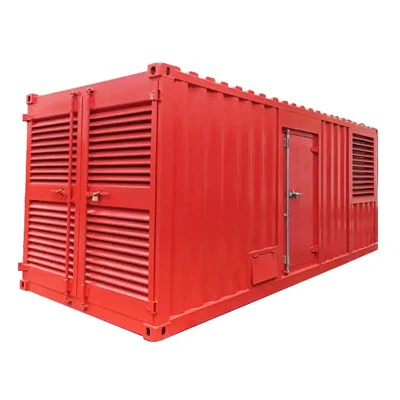
High Voltage Diesel Generator Set References
- Occupational Safety and Health Administration (OSHA). Noise Exposure Limits: Occupational Safety and Health Standards. 29 CFR Part 1910.
- Cummins Inc. Industrial Diesel Generator Sound Level Guidelines. 2023.
- World Health Organization (WHO). Environmental Noise Guidelines for the European Region. 2018.
- American National Standards Institute (ANSI). IEEE Standard Procedures for Noise Measurement on Rotating Electrical Machinery. ANSI S12.10-2019.
- National Fire Protection Association (NFPA). Standard for Emergency and Standby Power Systems. NFPA 110-2022.
Jiangsu Kaichen Electric Power Equipment Co., Ltd.
We are one of the most professional industrial diesel generator set manufacturers and suppliers in China, specialized in providing high quality diesel generators with reasonable price. We warmly welcome you to buy cheap industrial diesel generator set from our factory. Contact us for pricelist and quotation.
Address: Dinghuo Industrial Park, Jiangdu District, Yangzhou, Jiangsu Province
E-mail: 19962469616@163.com
WebSite: https://www.jskaichen-power.com/
