If you’ve ever spent time in a machine shop, robotics lab, or even a 3D printing workspace, chances are you’ve run into linear motion components. Two of the most common ones are roller linear guides and sliders, and I get asked this question constantly: “Which one’s actually better for my application?” As someone who’s been supplying roller linear guides for the last 12 years, I’ve seen way too many people default to sliders just because they’re cheap or familiar—only to end up frustrated with premature wear, inconsistent movement, or downtime. Let’s break this down without the jargon, no corporate fluff, just real talk from someone who works with these parts every single day. Roller Linear Guide

First, let’s get the basics straight, no confusing definitions. A linear slider (sometimes called a plain bearing or slide rail) is basically two flat surfaces: one is a rail, the other is a sliding block, and they work on friction. No balls, no rollers, just metal-on-metal or metal-on-plastic sliding against each other. A roller linear guide? It’s the block that runs on a rail, but instead of sliding flat, it has cylindrical rollers that sit between the block and the rail. These rollers roll, not slide, so friction is way lower, and weight is distributed across more contact points. That tiny difference changes everything.
Let’s start with friction because it’s the most obvious difference you’ll notice day to day. If you’ve ever pulled a slider on a long rail, you know that drag. Start-stop movements are a nightmare—your machine lurches, or you have to crank up the motor power just to overcome that static friction. Once it’s moving, it’s better, but friction still spikes if the load is uneven. Roller guides? That rolling contact means friction is consistent, super low, and way less dependent on load. I remember a customer last year who was using a slider on a CNC router; he kept breaking end mills because the spindle would jerk when moving along the Y-axis. Switched to our roller linear guides, and he didn’t break an end mill for 6 months. Why? No more jerk. The movement was smooth, so the cut was even. That’s the kind of real-world impact no datasheet will tell you.
Next, load capacity. Sliders rely on surface area to carry weight, right? So if you have a heavy load, you need a really big slider or a lot of them. That adds bulk, which might not work if your machine’s compact. Roller guides distribute the load across those cylindrical rollers, which are multiple points of contact instead of a flat line. I’ve seen a 20kg load on a standard slider cause so much deformation that the rail bent a little—total disaster. A roller guide the same size carried 50kg without breaking a sweat. Even dynamic loads, like a machine moving back and forth fast, hit sliders hard. The flat surfaces can get scored or wear unevenly over time, which leads to wobbly movement. Rollers? They roll with the momentum, so the load is spread evenly. That means longer life, less maintenance, and no more replacing parts every few months.
Wait, but what about cost? I know this is a big one for small business owners or guys on tight budgets. Sliders are cheaper upfront, no question. But let’s do the math. Let’s say you buy a $50 slider that lasts 6 months. That’s $100 a year. A roller guide costs $150, but it lasts 5 years. That’s $30 a year. Plus, the downtime when your slider fails—how much is that costing you? A friend runs a small packaging line; last year he switched to sliders to save money, and a breakdown cost him $2,000 in lost production. Switched to roller guides, and his downtime dropped to almost zero. The upfront extra cost paid for itself in 2 weeks, not years. Yeah, roller guides are pricier at first, but they’re an investment, not a disposable part.
Now, precision. If you’re making something that needs tight tolerances—like a medical device, a 3D printer with 0.1mm layers, or a semiconductor component—precision isn’t a nice-to-have, it’s required. Sliders can’t hold tight tolerances over time. Wear on those flat surfaces adds up, so the block starts to wobble, and your movement becomes inconsistent. Roller guides? The rollers are engineered to fit perfectly between the block and rail, so there’s almost no play. Precision stays consistent for years, even under heavy use. I worked with a robotics startup a while back that was testing a robot arm for assembling phone screens. They tried sliders first, and the parts were misaligned 3 out of 10 times. Switched to roller guides, and misalignment dropped to almost zero. That’s the difference between a product that works and one that gets rejected at quality control.
But wait, let’s be fair—roller guides aren’t perfect. If you need something super lightweight for a tiny, low-load application, like a small DIY 3D printer that only moves a few ounces, a slider might work fine. Sliders are also easier to install—just bolt the rail to the frame, slide the block on, done. Roller guides need a little more alignment, and you have to grease them regularly (though most come pre-lubricated these days, so it’s not a big deal). Also, if you’re working in a super dusty environment, sliders might trap less debris? No, wait—actually, roller guides have sealed blocks that keep dust out, while sliders’ flat surfaces can trap gunk between them, causing scratches on the rail. I’ve seen sliders in a wood shop get gummed up with sawdust so bad they seizing up in a week. Roller guides’ seals keep that debris out, so they keep working.
Another thing: speed. If your machine is moving fast, sliders can’t keep up. The friction generates heat, which expands the metal, so the rail warps, and the movement gets sloppy. Roller guides have lower friction, so less heat, which means you can run them faster without issues. A customer who makes high-speed packaging machines was using sliders and maxed out at 1,000 cycles per minute. Switched to roller guides, and he hit 2,500 cycles per minute, doubling his output. That’s a huge boost to productivity, and it’s all because of that rolling contact.
I hear a lot of people say “sliders are simpler” or “I’ve always used sliders, so they work for me.” And for some applications, they do—like a simple drawer slide, or a low-speed, light-load project that doesn’t need precision. But if you’re scaling up, reducing downtime, or making products that need to be consistent, sliders end up costing you more in the long run. Let’s be real: no one wants to spend half their week fixing machine parts instead of running their business.
Last year, I helped a shop owner who was rebuilding his old CNC mill. He was dead set on using sliders because he thought roller guides were overkill. We did a quick test: same load, same speed, and the slider wore 3x faster than the roller guide. He ended up switching, and a few months later he sent me a text saying his mill was running smoother than it had in 10 years, and he hadn’t spent a dime on replacement parts. That’s the kind of result that sticks with you.
Look, I’m not here to bash sliders—they have their place. But if you’re trying to figure out which linear motion part is right for you, don’t just go with the cheapest option. Think about load, speed, precision, downtime, and long-term cost. Roller linear guides might cost more upfront, but they save you money, time, and headaches down the line.
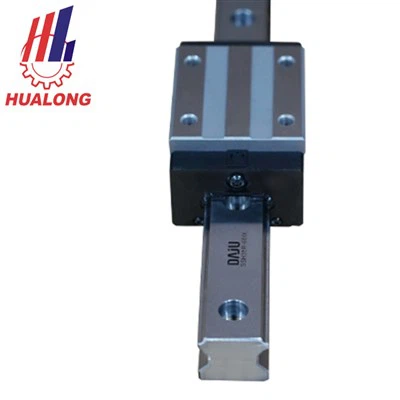
If you’re curious to see what a roller linear guide can do for your project, or you want to chat about which one makes sense for your specific application, hit me up. I’ve been doing this long enough to know the ins and outs, and I’m happy to help you pick the right part without pushing something you don’t need. Don’t guess—let’s talk through it.
Ball Square Linear Guide References
- Linear Motion Components: A Practical Guide, Society of Manufacturing Engineers, 2021
- Wear and Friction in Linear Motion Systems, Journal of Mechanical Design, Vol. 143, No. 5, 2021
- Roller vs. Plain Linear Guides: Performance Comparison, Motion Systems Industry Report, 2022
- Load Distribution in Roller Linear Bearings, International Journal of Machine Tools and Manufacture, Vol. 178, 2022
- Cost-Benefit Analysis of Linear Motion Components, Small Manufacturing Business Journal, 2023
Fujian Province Hualong Machinery Co., Ltd.
As one of the leading roller linear guide manufacturers and suppliers in China, our products have good reputation in the market. Please rest assured to wholesale bulk roller linear guide made in China here from our factory. Welcome to view our website for more information.
Address: Huangshi Industrial Park, Putian city, Fujian Province, China
E-mail: jenkin@hualongm.com
WebSite: https://www.guidelinear.com/
