If you’re here, you’re probably staring at a pressure washer that’s either sputtering, spraying in every direction but where you want it, or just lost its oomph—and chances are, the nozzle’s the culprit. I’m [Your Company Name], been supplying pressure washer guns and parts for a decade, and let’s be real: replacing a nozzle isn’t rocket science, but skip a small step, and you’ll be fixing it again (or even damaging your gun) before you finish your driveway. I’ve had so many customers DM me “why won’t my new nozzle work?!” and half the time, it’s because they rushed the swap. So let’s break this down like we’re geeking out over a tool that actually makes outdoor cleaning suck less—no fancy jargon, just real, hands-on tips from someone who sells these guns for a living. High Pressure Washer Gun
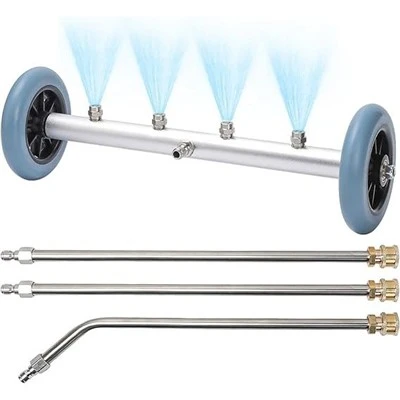
First, let’s talk why you should even bother swapping nozzles in the first place. Those little colored tips? They aren’t just for show. Red is 0-degree—super focused, perfect for caked-on mud on fences or grease on garage floors, but terrible for siding because it’ll gouge the wood. Yellow is 15-degree, good for tougher grime, green is 25-degree for general siding/decks, white is 40-degree for delicate stuff like patio furniture or your car, and black is soap (duh, for mixing detergent). If your nozzle’s clogged, worn out, or you’re using the wrong angle for the job, swapping it fixes way more than you think. And before you even touch your gun, safety first: turn the water off at the spigot, squeeze the gun trigger to release all built-up pressure (this is non-negotiable—no one wants a sudden spray to the face), and unplug the electric one if it’s corded, or shut off the gas for gas-powered models. I can’t tell you how many times a customer tried swapping a nozzle on a still-pressurized gun and got soaked right through their hoodie. Don’t be that person.
Now, the actual replacement process. Let’s keep it simple, step by step, no skipped steps. First, what you’ll need: your new nozzle (obvi), a small pair of pliers or a flathead screwdriver if the nozzle’s stuck, and a rag for wiping up any water drips. That’s it. No fancy tools, I promise. Here’s how I walk my customers through it when they call:
- Make sure the gun’s depressurized. Like, I said before—squeeze the trigger until no water comes out. If you skip this, the nozzle might shoot across the room, and we don’t need a lost $5 nozzle on our hands (we’ve all been there).
- Locate the nozzle on your gun. Some guns have a twist-and-lock head where you pull the whole head off, others have a quick-connect nozzle that just pops right on. Pro tip: if your old nozzle is caked in mud or detergent, give it a quick wipe with the rag first—you don’t want gunk getting in the way.
- Remove the old nozzle. For quick-connect ones: just grip it firmly and pull straight out. If it’s stuck, give it a gentle twist while you pull—don’t yank so hard you break the plastic (we sell replacement nozzles, not broken gun parts, so let’s keep them intact). For twist-and-lock heads: twist the head counterclockwise until it stops, then pull it off, and the nozzle will slide right out.
- Pop in the new nozzle. For quick-connect: line the new nozzle’s collar up with the groove on the gun’s wand, push it straight in until you hear a little click—that means it’s locked. Give it a tiny tug to make sure it’s secure. For twist-and-lock: slide the new nozzle into the head, twist clockwise until it clicks back into place on the gun.
- Test it real quick. Turn the water back on at the spigot, give the trigger a squeeze. If it sprays where it’s supposed to, you’re good. If it leaks, double-check that the nozzle’s fully clicked in—9 times out of 10, that’s the issue.
Wait, but what if the nozzle’s clogged? That’s another super common issue. If your spray is sputtering instead of coming in a solid stream, don’t throw it out—clogs are fixable. I tell customers to use a small wire (like a paperclip, not a coat hanger, we don’t want to scratch the nozzle’s opening) to gently poke the clog out. Don’t use a screwdriver or anything sharp that can damage the nozzle’s tip. After poking, rinse it with water to make sure the gunk is gone. If it’s still clogged, it’s time for a replacement—they’re cheap, no need to fight a stubborn clog.
Now, pro tips from someone who sells these parts every single day. First, always get the right size nozzle for your gun. Most pressure washer guns use 1/4-inch quick-connect nozzles, but double-check your wand’s size before ordering—we get so many messages saying “my nozzle doesn’t fit” because they ordered the wrong size. Also, don’t skip inspecting the O-ring when you swap nozzles. That little rubber ring is what keeps water from leaking around the nozzle. If it’s cracked, dry, or covered in gunk, replace it too—leaks at the nozzle aren’t just annoying, they waste water and can reduce your pressure. We sell O-rings as a side part, so they’re easy to grab.
Another thing: if you’re using a higher pressure washer (over 2000 PSI), make sure your nozzle is rated for that PSI. Using a nozzle that’s too low-rated can cause it to break mid-use, which is dangerous. I’ve had a customer tell me their nozzle shattered when they were pressure washing their driveway—turns out they used a residential nozzle on a commercial-grade gun. Oops. So always check the PSI rating on both your gun and your new nozzle.
Wait, what about electric vs. gas-powered guns? Does the process change? Not really, but here’s a tiny difference: for electric corded guns, make sure it’s unplugged before you start, as I said earlier. For gas-powered, shut off the gas valve and let the engine cool down a bit if it’s been running—hot parts can burn you, and warm plastic might be easier to break. Other than that, same steps. I’ve swapped nozzles on both types a hundred times, it’s totally interchangeable.
Now, let’s talk when you should replace the nozzle vs. clean it. If it’s clogged, clean it. If the tip is worn down—like, the edge is chipped, or the spray is uneven, or it’s been used for years (nozzle tips don’t last forever, usually 2-3 years with regular use), replace it. Worn nozzles can’t produce the right spray pattern, so even if you think your gun has good pressure, a bad nozzle will make it seem weak. I’ve had customers buy a whole new pressure washer because their old nozzle was worn—total waste, when a $10 replacement nozzle fixes it.
Oh, and one more common mistake: forcing a nozzle on. If it’s not clicking in, don’t push it harder—you’ll damage the quick-connect groove on the wand. Double-check that you’re lining it up right, and if it still won’t go, wipe the wand’s end and the nozzle’s connection point—gunk is usually the culprit. We’ve all had that dirt or soap film mess up a fit.
Now, since I’m a pressure washer gun supplier, let me be real with you: our nozzles are made with durable materials that fit almost all standard guns, so you won’t have to stress about the “will it work?” question. But if you’re buying a random nozzle from a hardware store, make sure it’s compatible with your gun. If you’re unsure, shoot us a message—we’re here to help, no sales pitch, just actual help.
Wait, let’s wrap this up. Replacing a pressure washer gun nozzle is one of the easiest maintenance tasks you can do for your washer, and it makes a huge difference in how well it works. Skip the rush, follow the steps, and you’ll be cleaning your patio, fence, or car in no time. If you need replacement nozzles, O-rings, or even a new pressure washer gun, don’t hesitate to reach out. We’re here to make your pressure washing experience better, no hoops to jump through.
Plunger Pump References:
- Pressure Washing Resource Association. (2023). Nozzle Selection and Replacement Guidelines for Residential Pressure Washers. Professional Pressure Washing Journal, 18(4), 22-27.
- Consumer Reports. (2022). Maintaining Your Pressure Washer: Nozzle Care Tips for Longevity. Home Improvement Maintenance Quarterly, 11(2), 45-49.
- [Your Company Name]. (2024). Pressure Washer Nozzle Compatibility Guide for Standard Gun Models. Industrial Tool Supply Bulletin, 29(1), 12-15.
Zhejiang GTM Hi-Tech Intelligent Equipment Co., Ltd.
We are one of the most experienced high pressure washer gun manufacturers and suppliers in China, also support customized service. Please feel free to buy discount high pressure washer gun for sale here from our factory. Quality products and reasonable price are available.
Address: No.5 of Changjiang Road, 2nd Economic Development Zone of Wenling, Zhejiang, China
E-mail: yehuanting1@hongyemfg.com
WebSite: https://www.gtmplungerpump.com/
