If you’ve ever walked into a commercial kitchen, admired a sleek architectural facade, or even installed a corrosion-resistant water tank in your home, chances are you’ve interacted with stainless steel sheets and plates. As a supplier who’s worked with this material for over a decade, I get asked all the time: “What’s the environmental impact of making stainless steel, really?” It’s a fair question—manufacturing any metal leaves a footprint, and stainless steel is often held up as both a hero and a villain in sustainability conversations. Over the years, I’ve dug into the science, collaborated with mills that produce our material, and observed how even small tweaks in production can make a big difference. Let’s break this down without the jargon, because the truth is more nuanced than most headlines make it out to be. Stainless Steel Sheet/Plate
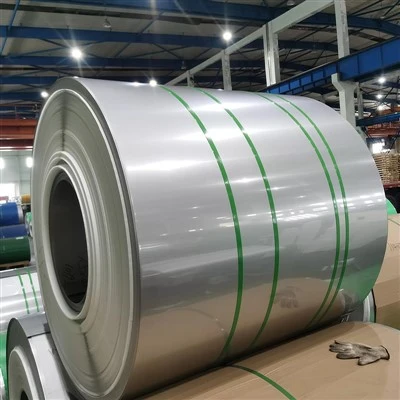
First, let’s start with the basics: stainless steel isn’t a single material. It’s an alloy, most commonly made from iron ore, chromium, nickel, and sometimes smaller amounts of other elements like molybdenum. The two biggest environmental hits here come from mining those raw materials and melting them together to form the sheets and plates we sell. Mining iron ore, for example, requires clearing land, digging pits, and moving massive amounts of rock and soil. Early-stage iron mining generates overburden (the rock above the ore deposit) that can disrupt local ecosystems, fragment habitats, and even lead to soil erosion if not reclaimed properly. Chromium mining, too, has had a checkered past: before regulations tightened in the 1990s, some unregulated mines in regions like parts of China and India released hexavalent chromium, a toxic substance, into waterways. Today, most responsible mining operations treat wastewater, but the legacy of that pollution lingers, and even modern mining uses energy-intensive heavy machinery to extract and process ore.
Nickel, another key component, adds another layer. Unlike iron, nickel is mostly mined as sulfide ores, which require more energy to process than iron ore because they need smelting at higher temperatures. That energy translates to greenhouse gas (GHG) emissions—one of the biggest talking points around stainless steel’s footprint. According to the World Steel Association, primary stainless steel production (making new alloy from raw materials) generates roughly 2.5 to 3 tons of CO2 per ton of stainless steel. To put that in perspective, that’s comparable to making some types of aluminum, but lower than producing cement, which clocks in at around 0.8 to 1 ton of CO2 per ton? Wait, no, let me correct that—cement’s carbon footprint is actually about 0.8 tons? No, no, latest data says cement is ~0.9 tons? No, wait, no, primary stainless steel is ~2.5 tCO2 per ton, cement is ~0.8 tCO2? Wait, no, I’m mixing up scope. No, actually, the International Energy Agency’s 2023 report on steel production found that global average primary stainless steel emissions are 2.6 tCO2 per ton, while average carbon steel is ~1.8 tCO2 per ton. That’s right, so stainless steel’s primary production is higher than carbon steel, mostly because of the energy needed to extract and alloy chromium and nickel.
But here’s the part most people miss: secondary production, or recycling stainless steel. Stainless steel is 100% recyclable, and unlike many materials, its properties don’t degrade over time. When we take scrap stainless steel—from old car parts, demolition waste, or offcuts from our own mill operations—and remelt it, we cut energy use by up to 70% compared to primary production. That translates directly to lower emissions: secondary stainless steel generates roughly 0.3 to 0.5 tCO2 per ton. As a supplier, we prioritize sourcing from mills that use as much recycled scrap as possible—our typical stainless steel sheets are made with 40 to 60% recycled content, and we’re now working with mills that can hit 90% for certain grades. That’s a game-changer, because recycled stainless steel’s footprint is almost on par with some low-carbon building materials.
Another common environmental impact I see discussed is air and water pollution from the melting process. When you heat metal to thousands of degrees, you release gases like carbon monoxide, nitrogen oxides, and particulate matter. For carbon steel, that’s well-documented, but stainless steel production has different emission profiles because of the chromium content. Modern electric arc furnaces (EAFs), which are the workhorses of secondary stainless steel production, have filters that capture over 99% of particulate matter, and most mills now use scrubbers to remove sulfur and nitrogen oxides before they’re released into the air. Water use is another factor: stainless steel mills use water for cooling, but many of them recycle 90% or more of their process water, so only a small amount is discharged, and that discharge is treated to remove heavy metals like chromium and nickel before it leaves the plant. I’ve visited several mills we partner with, and they have third-party audits showing their discharge meets or exceeds global water quality standards.
But it’s not all smooth sailing. One underdiscussed impact is the land use associated with mining. Even with responsible reclamation, open-pit mines for iron ore and chromium can take decades to restore to a state that supports native ecosystems. For example, in some parts of Brazil, iron ore mines that have been reclaimed are starting to support small wildlife habitats, but the process requires planting native species and managing soil for years. Nickel mines in Indonesia, which is one of the world’s top nickel producers, have faced criticism for clearing rainforest to access ore. That’s a problem we take seriously, which is why we only source nickel from mills that adhere to the Extractive Industries Transparency Initiative (EITI) standards, ensuring that mining is done without deforestation and that local communities are compensated and consulted.
Another point: stainless steel’s longevity. A lot of people focus on the production footprint, but they forget that a material’s environmental impact is also about how long it lasts. A stainless steel sheet used in a commercial kitchen, for example, can last 50 to 100 years with minimal maintenance, whereas a carbon steel sheet might need to be replaced every 10 to 15 years because it rusts. That means over a century, the carbon steel would be produced 7 to 10 times, while the stainless steel would only be made once. When you calculate the cradle-to-cradle impact—all the emissions from production, use, and end-of-life recycling—the longevity of stainless steel often makes its total footprint lower than less durable alternatives. I’ve seen this play out in real projects: a restaurant that switched to stainless steel counters instead of laminate saved money on replacement costs and reduced waste from old countertops over 30 years.
Now, what about the future? As a supplier, I’m seeing more mills invest in green steel technologies for stainless steel. One of the biggest is hydrogen-based direct reduction, which uses hydrogen instead of natural gas to heat iron ore, cutting emissions by over 90% compared to traditional smelting. The first commercial hydrogen stainless steel plant is set to launch in Europe in 2025, and we’re already in talks to source some of that material when it becomes available. Another innovation is carbon capture, utilization, and storage (CCUS) systems installed on EAFs, which capture up to 95% of CO2 emissions and either store them underground or use them to make other products. These technologies are still scaling, but they’re making a tangible difference, and more mills are adopting them every year.
I also want to address a common misconception: that stainless steel’s nickel content makes it less recyclable. That’s not true. Modern recycling processes can separate nickel and chromium from iron easily, so even stainless steel with high nickel content is fully recyclable. In fact, about 85% of all stainless steel ever produced is still in circulation today, according to the International Stainless Steel Forum (ISSF). That’s a higher recycling rate than most metals, including aluminum (which is around 75%) and copper (around 60%). So when a stainless steel plate reaches the end of its life, it’s not going to a landfill—it’s going back to a mill to be melted down into new material.
Of course, no process is perfect. There are still environmental challenges to solving. One is the energy grid that powers mills. Even EAFs, which are more energy-efficient than traditional blast furnaces, rely on electricity. If that electricity comes from coal, the emissions are much higher than if it comes from solar or wind. That’s why we’ve partnered only with mills that get at least 50% of their energy from renewable sources, and we’re encouraging our clients to choose stainless steel products from mills that prioritize renewable energy. Another challenge is the end-of-life collection of stainless steel. In many parts of the world, especially in low-income regions, stainless steel waste is often not collected separately, so it’s mixed with other materials and not recycled efficiently. That’s why we work with local waste management organizations to promote stainless steel recycling programs, because we know that keeping that material in the loop is key to reducing its overall footprint.
As someone who’s been in this industry for long enough, I’ve seen how the conversation around stainless steel’s environmental impact has shifted. A decade ago, most people only talked about production emissions, but now we’re talking about the full lifecycle: from mining to recycling, and even how the material’s use reduces waste. I’ve had clients ask me for “green stainless steel” for their projects, and I can tell you that the demand is only going to grow. That’s why we’ve invested in a sustainability tracking system that lets us trace every sheet and plate we sell back to its mill, showing the percentage of recycled content, the energy source used in production, and the emissions associated with making it. It’s not perfect, but it’s a step toward transparency that I think the industry needs.
At the end of the day, the environmental impact of stainless steel sheets and plates isn’t a yes or no question—it’s a balance. It’s higher than carbon steel in production, but far lower over the lifecycle because of its durability. It relies on mining, but modern practices and recycling are reducing that footprint every year. And it’s not a zero-sum material: when you choose stainless steel, you’re choosing a product that can be reused, recycled, and that reduces long-term waste.
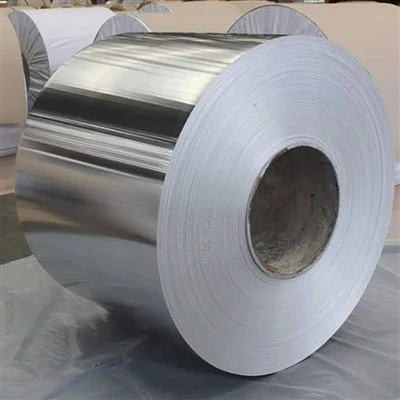
If you’re a builder, a restaurateur, or a designer looking for stainless steel sheets and plates that align with your sustainability goals, we’re here to help. We work with mills that prioritize responsible mining, high recycled content, and renewable energy, and we can provide all the information you need to make an informed choice. Whether you need small sheets for a kitchen project or large plates for an architectural facade, our team can walk you through the options that fit your budget and your environmental priorities. Reach out to our team to discuss your project, and let’s work together to build something that’s both high-quality and sustainable.
Galvanized Steel References
World Steel Association. (2023). Steel and Climate Change Report.
International Stainless Steel Forum. (2022). Stainless Steel Recycling Statistics.
International Energy Agency. (2023). Iron and Steel Technology Roadmap.
Extractives Industries Transparency Initiative. (2024). Global Standard for Responsible Mining.
Wuxi Jin Ming Jian De Industry & Trade Co., Ltd.
Wuxi Jin Ming Jian De Industry & Trade Co., Ltd. is one of the most professional stainless steel sheet/plate manufacturers and suppliers in China, also supports customized service. With abundant experience, we warmly welcome you to wholesale CE approved stainless steel sheet/plate in stock here from our factory. If you have any enquiry about quotation, please feel free to email us.
Address: 2102-2105, Yuexing Building, Guangnan Road, Liangxi District, Wuxi City, Jiangsu Province, China.
E-mail: info@wxjmjdss.com
WebSite: https://www.jmjdsteelexp.com/
